
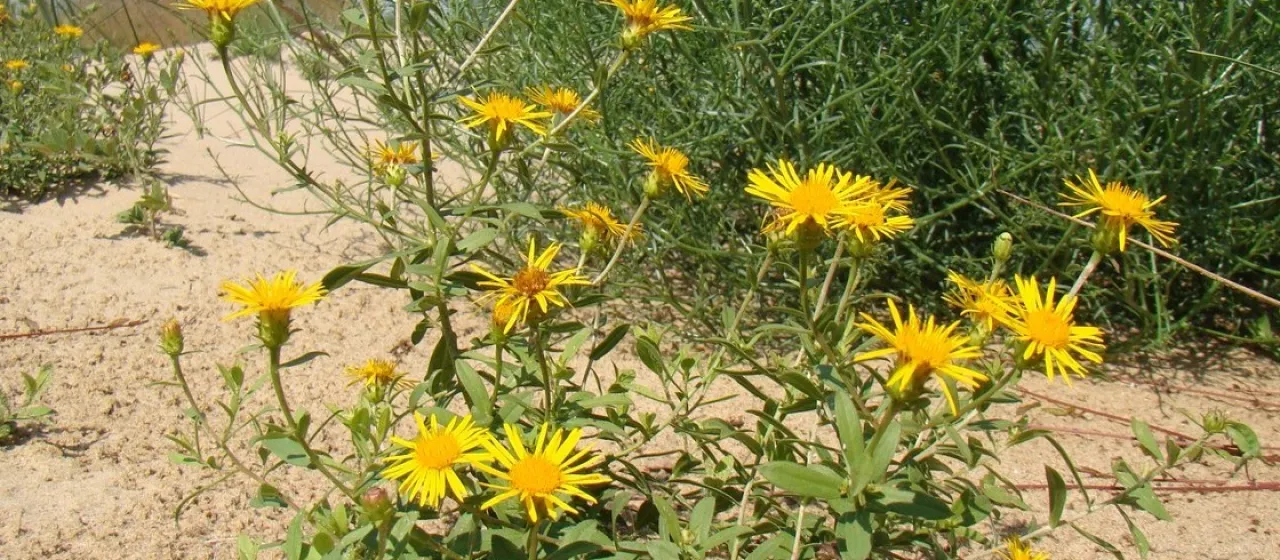
Description
Inula sabuletorum is a perennial herbaceous plant belonging to the Asteraceae family. In agriculture, it is cultivated primarily for its rhizomes, which contain valuable compounds used in the medicinal and cosmetic industries, making it a niche but economically viable crop for certain soil conditions.
Originating from arid and semi-arid regions of Eurasia, this plant has evolved to thrive in sandy and stony substrates. Its natural distribution is largely concentrated in steppe zones, where it demonstrates remarkable resilience against environmental stress factors that would inhibit more sensitive crops.
Botanically, the plant features a robust root system and a sturdy stem with yellow, daisy-like inflorescences. This morphology allows for efficient nutrient storage during the dormant season, which is essential for the plant's survival in regions with erratic rainfall patterns and poor soil fertility.
Successful cultivation requires well-drained, sandy soils with neutral to slightly alkaline pH levels. Agrotechnical management centers on optimal seedbed preparation and early-stage weed suppression. Since the plant is highly sensitive to competition during the first growing season, mechanical inter-row cultivation is highly recommended.
Crop protection focuses on managing soil-borne pathogens and pests like wireworms. Preventive measures, including proper crop rotation and ensuring soil drainage, are crucial for maintaining healthy yields. Harvesting is typically conducted in the autumn, ensuring the plant has completed its annual growth cycle to maximize chemical content.