
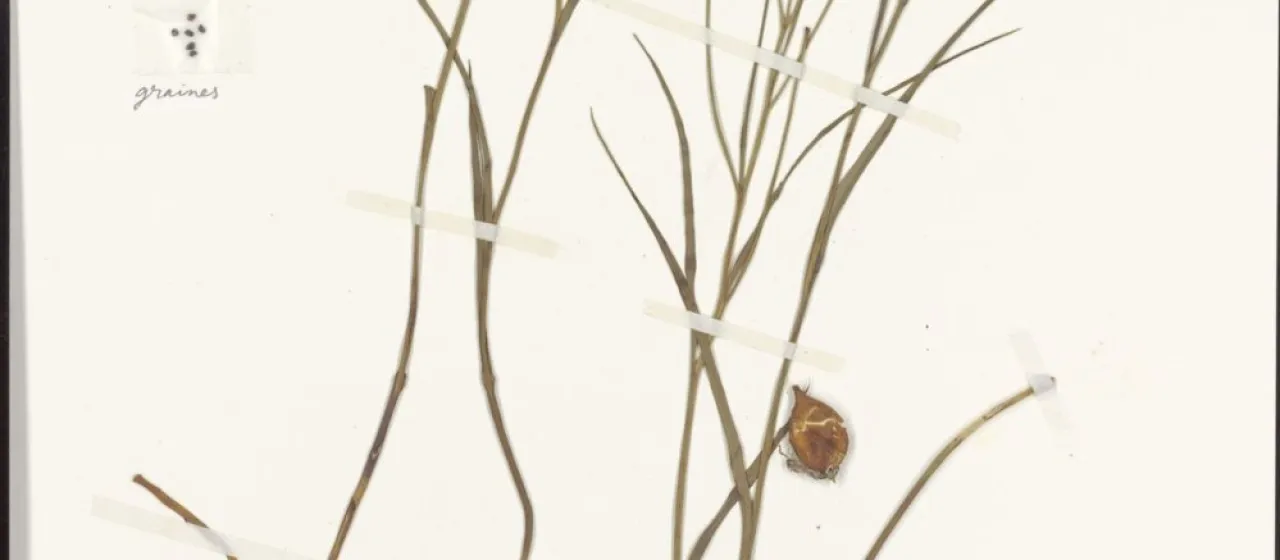
Description
Iphigenia ledermannii is a rare perennial herbaceous plant belonging to the Melanthiaceae family. As a specialized species, it has gained attention among botanists and researchers focusing on the diverse flora of the African continent. Its classification within the Melanthiaceae family highlights its structural similarities to other well-known geophytes, yet it maintains distinct characteristics specific to its environment.
The plant originates from the tropical regions of Africa, with primary habitats identified in Cameroon. Its natural range is characterized by specific ecological niches where seasonal water availability plays a crucial role in the plant's life cycle. Due to these habitat requirements, the species remains relatively rare and is not subject to large-scale agricultural cultivation.
Botanically, the species is defined by its bulbous root system, which allows it to survive in environments with fluctuating precipitation levels. It produces slender foliage and delicate flowers that bloom during specific periods. These morphological features are adaptations to the nutrient-poor and seasonally dry soils common in its native range.
Cultivation requirements for Iphigenia ledermannii involve precise soil management. It thrives in porous, well-drained soil substrates that prevent moisture accumulation around the bulb, which is highly susceptible to decay.
- Requires excellent drainage to prevent bulb rot.
- Needs a distinct dormancy period.
- Prefers warm temperatures with moderate light exposure.
Regarding its utility, the plant is primarily of interest for research purposes, particularly in the study of natural secondary compounds. There is currently no significant commercial demand, and its protection status is prioritized in botanical studies. Potential pests and diseases include root-borne fungal pathogens, especially if the soil drainage is not maintained to optimal standards, potentially endangering the bulb health.