
Description
Ipomoea barbigera is a herbaceous climbing plant belonging to the Convolvulaceae family. This species is an annual vine highly valued for its rapid growth rate and adaptability to various light conditions. In an agricultural and horticultural context, it is primarily classified as an ornamental plant noted for its distinctive funnel-shaped blooms.
The historical range of this species originates from the tropical and subtropical regions of North America. In its natural habitat, the plant thrives along forest edges and in sunny locations with moderate moisture. Today, Ipomoea barbigera is cultivated in many regions worldwide as an ornamental climber for vertical gardening, including trellises, fences, and garden wall displays.
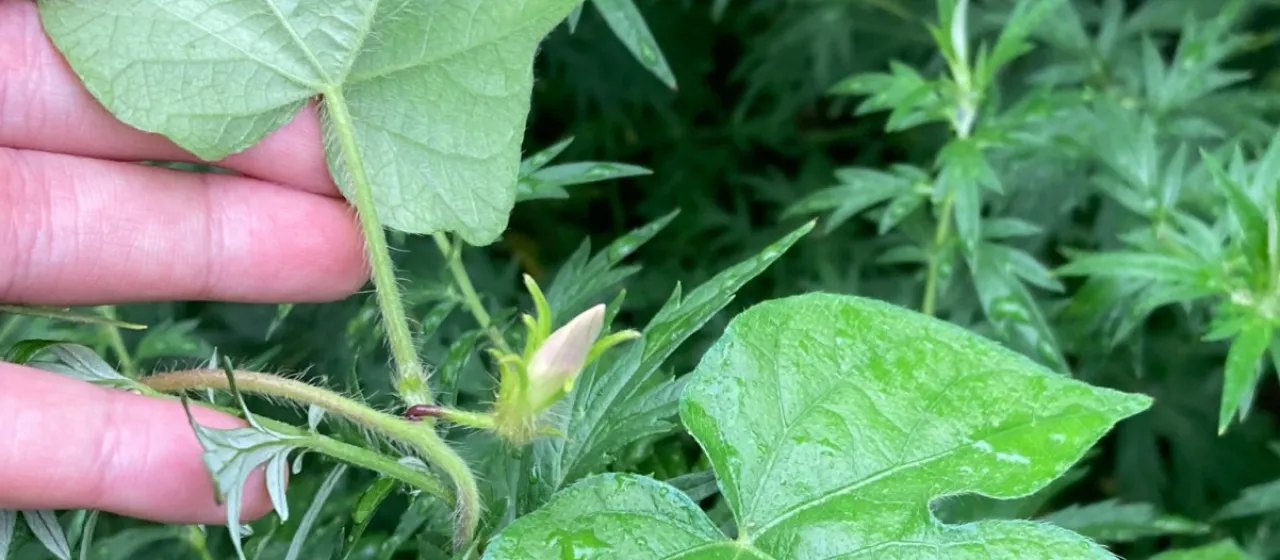
Botanically, the plant is characterized by heart-shaped leaves and slender, fast-growing stems that can reach several meters in length. The flowers of Ipomoea barbigera have a unique form, with color variations ranging from soft blue to deep purple. The root system is relatively shallow, which requires careful irrigation management during hot, dry weather conditions.
Cultivation practices involve sowing seeds directly into the soil after the last frost or using seedling trays to expedite the flowering season. The crop prefers well-drained, fertile loamy soils with a neutral pH. A critical element of the care regimen is providing sturdy supports, as the vine requires vertical structures to thrive and achieve optimal stem development and abundant flowering.
Primary uses include vertical landscape design, the creation of privacy screens (living hedges), and the decoration of garden structures. Common plant health issues include powdery mildew and various root rot diseases caused by waterlogged soils. Key pests to monitor include spider mites and aphids, which are managed through regular field scouting and the application of appropriate horticultural insecticides when necessary.