
Description
Ipomoea bolusiana is a perennial herbaceous plant belonging to the Convolvulaceae family. Unlike many of its trailing relatives, this species is highly valued for its large, tuberous underground structure known as a caudex. This unique feature allows the plant to thrive in nutrient-poor soils and withstand extended periods of drought, which are characteristic of its native environment.
The plant originates from Southern Africa, where it is found in the wild across Namibia, South Africa, and Botswana. It is primarily adapted to savanna regions, characterized by periodic rainfall and intense dry seasons. In its natural habitat, the plant remains dormant during the dry months, emerging with vigorous growth only when sufficient moisture is available in the soil.
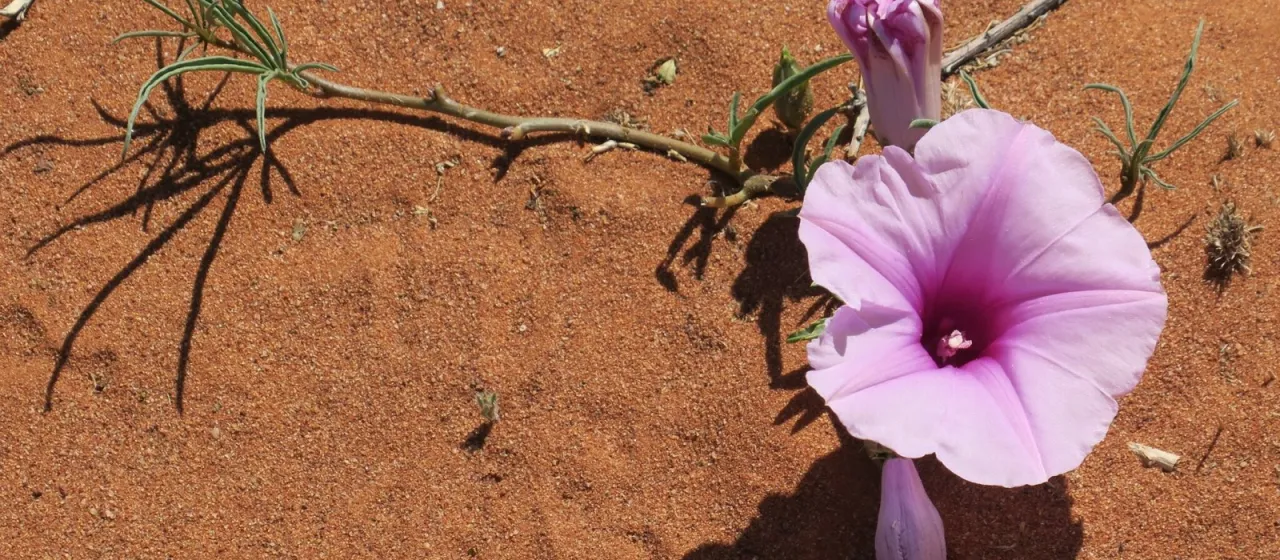
Botanically, Ipomoea bolusiana produces slender, upright, or sprawling stems adorned with narrow, elongated leaves that often feature a fine pubescence. The flowers are typically trumpet-shaped and display delicate shades ranging from soft pink to deep violet. This morphology is an evolutionary strategy to minimize water loss while ensuring effective pollination by local insects.
Cultivation of this species requires a specialized approach, emphasizing excellent drainage and high light exposure. In horticultural settings, it is best grown in a porous mineral-based substrate. The watering regimen is critical: it should be watered thoroughly during the growth phase but kept completely dry during the winter dormancy period to prevent the tuberous root from succumbing to rot.
Economic and horticultural uses of Ipomoea bolusiana are primarily focused on specialized gardening:
- Ornamental use in xeriscaping and desert-style gardens.
- Collection specimens for enthusiasts of caudiciform plants.
- Botanical research into drought-tolerance and water-storage adaptations.
Regarding plant health, the main threats involve soil-borne pathogens and root rot, typically caused by overwatering or poor drainage systems. Insect pests like spider mites or mealybugs can affect the foliage if the plant is grown in poorly ventilated or excessively dry indoor conditions. Regular monitoring and maintaining appropriate seasonal care cycles are essential for the longevity of the plant.