
Description
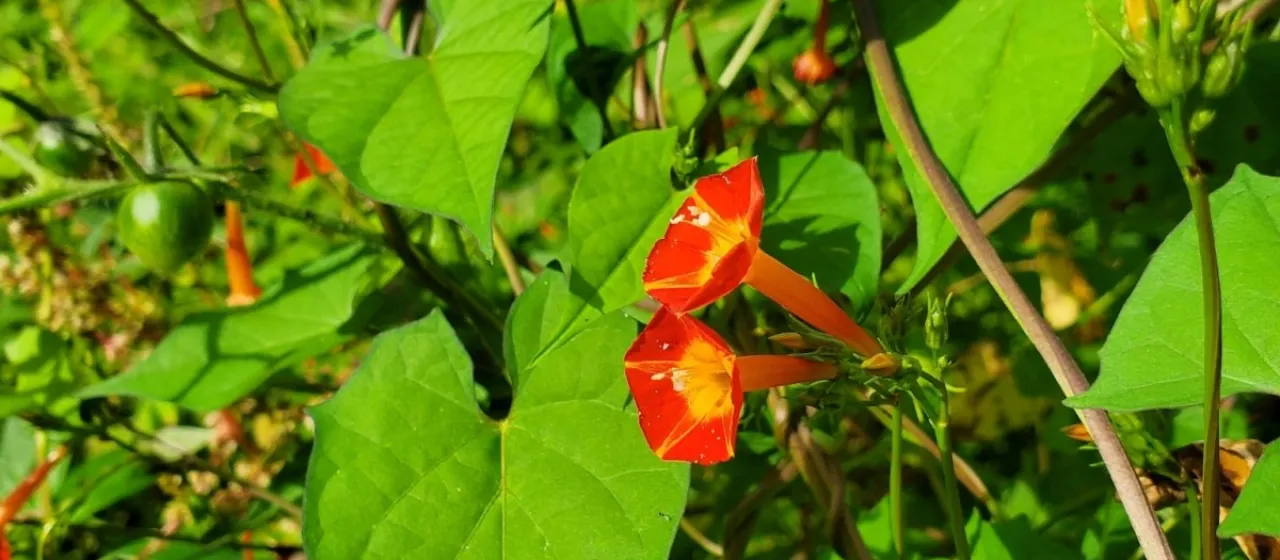
Scarlet morning glory (lat. Ipomoea coccinea) is an annual climbing vine belonging to the Convolvulaceae family. This plant is widely recognized for its rapid growth rate and abundant production of vibrant scarlet-orange, tubular-shaped flowers, which serve as a magnet for various pollinators.
Originating from tropical regions of the Americas, this species has been introduced to various parts of the globe as a decorative garden plant. While it grows as a perennial in tropical climates, in temperate zones, it is cultivated strictly as an annual, as it is highly susceptible to frost and requires consistently warm temperatures to reach maturity.
The botanical profile of the plant includes slender, twining stems that can reach heights of 2 to 3 meters, and alternate, heart-shaped to lobed foliage. The flowers appear in clusters and are characterized by their narrow, trumpet-like form, which is distinct from many other popular morning glory species, providing a refined aesthetic to any vertical garden structure.
Successful cultivation requires a location with full sun exposure and protection from strong winds. The soil should be fertile, light, and well-drained to ensure proper development. Consistent moisture is necessary for optimal growth, but waterlogging must be avoided, as it can cause significant stress to the root system and inhibit flower production.
- Start seeds indoors in late winter to extend the growing season.
- Ensure sturdy support systems like trellises or netting are installed early.
- Monitor for common pests like aphids and spider mites.
- Apply balanced fertilizers periodically to maintain vigor.
In landscaping, scarlet morning glory is primarily used for vertical screening, covering fences, and beautifying arbors. While relatively hardy, gardeners should be vigilant against fungal infections such as powdery mildew, especially in humid conditions. Maintaining good air circulation and following proper spacing guidelines are the best preventative measures against these common plant health issues.