
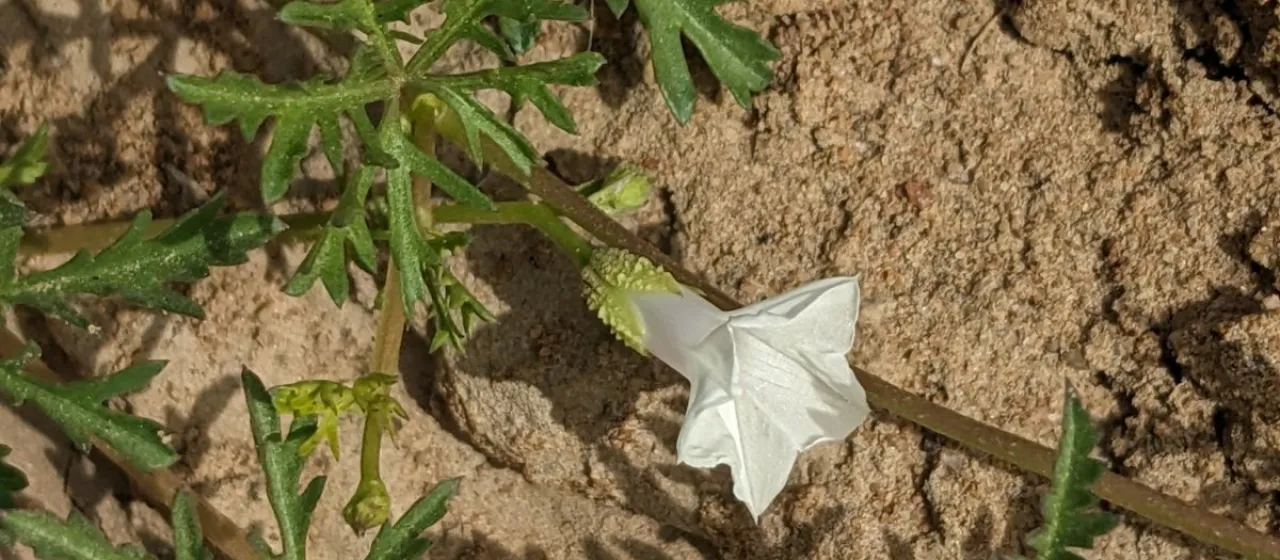
Description
Ipomoea coptica is a herbaceous climbing plant belonging to the Convolvulaceae family. This species is recognized for its adaptive capabilities in arid and semi-arid environments, making it a subject of interest for agricultural systems located in tropical zones.
The plant originates from the tropical regions of Africa and Asia. Its natural distribution range spans across countries with hot and dry climates, where it has evolved to withstand limited rainfall and intense exposure to sunlight. The species is widely recognized for its robustness in unfavorable soil conditions compared to other ornamental or agricultural vines.
Botanically, Ipomoea coptica is characterized by its palmately lobed leaves and funnel-shaped flowers, which are typical of the Ipomoea genus. The plant exhibits a vigorous climbing habit, necessitating structural support in commercial or garden settings to optimize its growth and foliage development.
In terms of agricultural requirements, this crop thrives in well-drained, light-textured soils such as sandy or loamy soils with a neutral pH. It is highly photophilous and requires full sun exposure to reach its maximum yield potential. Excessive soil moisture is detrimental, as it increases the risk of root rot and inhibits the plant's natural growth cycle.
The economic and agricultural utility of this plant is multifaceted. It is researched for its phytochemical properties, which find applications in traditional medicine. Furthermore, its ability to cover large surface areas makes it useful for soil stabilization in regions susceptible to desertification. Common pests include spider mites and aphids, which are typically managed through regular monitoring and appropriate horticultural practices.