
Description
Bush morning glory (Ipomoea leptophylla) is a distinctive perennial herbaceous plant belonging to the Convolvulaceae family. Unlike the common trailing vines associated with the morning glory genus, this species grows as a stout, woody-based bush, adapted specifically for harsh, arid environments.
Native to the Great Plains and prairies of North America, this plant is well-known for its ability to thrive in extremely sandy, well-drained soils where nutrient availability is low. It serves as an essential component of native grassland ecosystems, demonstrating remarkable resilience to persistent drought conditions.
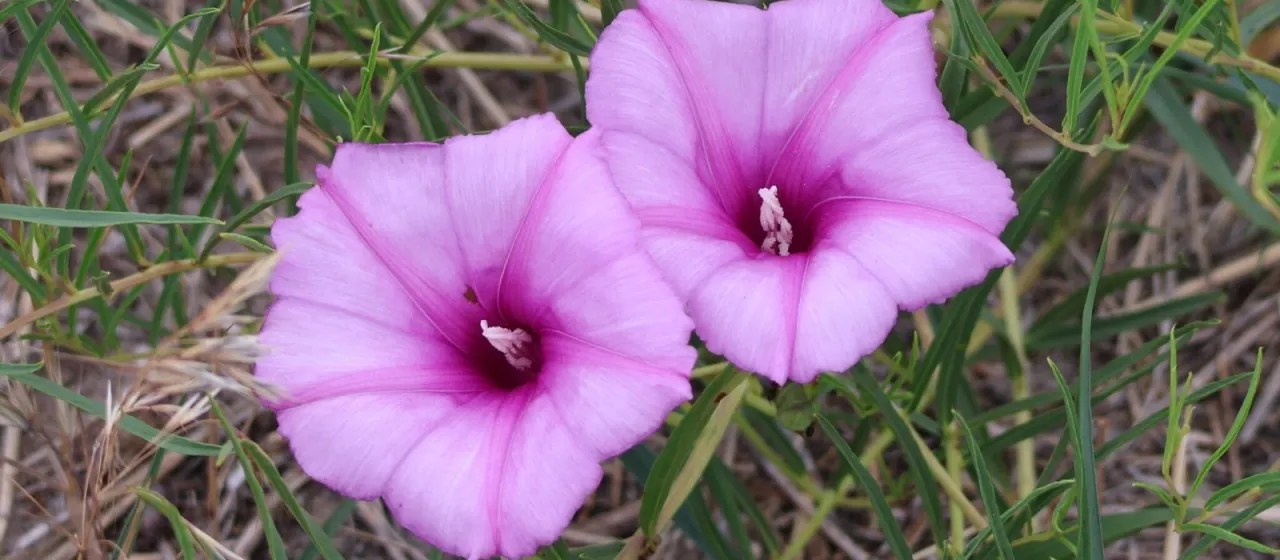
Botanically, the plant is characterized by its narrow, linear foliage and large, showy pink to magenta trumpet-shaped flowers. The most impressive feature of this species is its massive, tuberous taproot, which can grow several feet deep into the soil, acting as a profound reservoir for moisture and energy storage.
Cultivation requires conditions that mimic its natural habitat: full sun, excellent drainage, and poor to sandy soil types. It does not tolerate high humidity, heavy clay soils, or frequent waterlogging, which often result in root rot and decline of the plant. Proper spacing is essential to ensure adequate airflow around the foliage.
Commercially, the plant is valued primarily for xeriscaping and soil stabilization on sandy slopes where erosion control is necessary. While not a primary food crop, its historical significance includes the consumption of its edible, though starchy, root by indigenous populations, marking it as a plant of ethnobotanical interest.
- Exceptional drought tolerance.
- Massive, deep-reaching taproot.
- Preference for sandy and rocky soils.
- Low nutritional requirements.
- Excellent for preventing soil erosion.