
Description
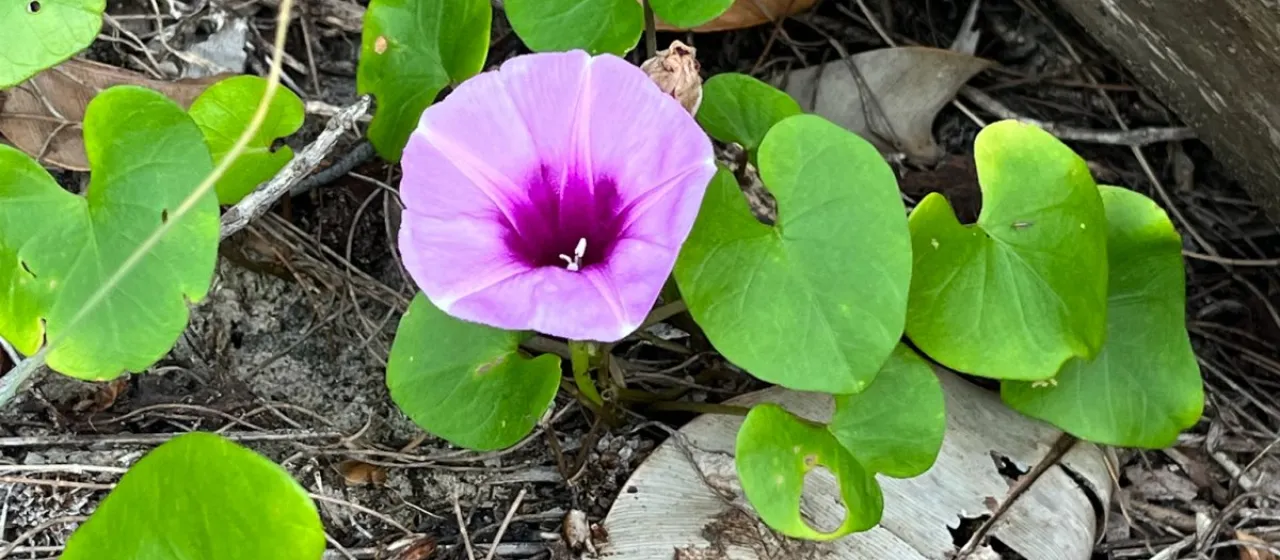
Beach morning glory (Ipomoea littoralis) is a perennial herbaceous plant belonging to the Convolvulaceae family. This species is naturally adapted to coastal environments, acting as a crucial pioneer species for stabilizing sandy habitats and dunes against wind and water erosion.
The native range of this plant encompasses the tropical regions of the Americas and the Caribbean. It thrives in high-light environments and is physiologically capable of tolerating soil salinity and extreme coastal exposure. Its survival strategy makes it a key component of fragile tropical maritime ecosystems.
Botanically, the plant features prostrate, creeping stems that root at the nodes, forming dense mats. The leaves are typically heart-shaped and succulent, which helps in water retention. The flowers exhibit the characteristic funnel shape of the genus, generally appearing in shades of white or pale pink, which add significant ornamental value to coastal landscapes.
Cultivation of this species requires well-draining, sandy substrates and high thermal conditions. It is frost-sensitive and performs best in full sun exposure. Agrotechnical management focuses on minimizing moisture accumulation around the root zone, as excessive dampness can lead to decay. Propagation is easily achieved via cuttings or seeds in warm seasons.
In terms of practical use, Ipomoea littoralis is valued for phytoremediation and landscaping in coastal areas. It serves as an effective ground cover that prevents erosion on slopes and sandy embankments. Furthermore, it is often utilized in sustainable garden design where maintenance-free, drought-tolerant, and sun-loving ground covers are required.
- Excellent tolerance to saline soil conditions
- Rapid vegetative spread for erosion control
- High aesthetic appeal with floral displays
- Low nutrient requirements for survival
Common agricultural threats include pests like spider mites and aphids, which can infest the foliage in sheltered or indoor environments. Regarding pathology, the plant is susceptible to fungal rots if exposed to poor ventilation or waterlogged soil. Proper soil management and air circulation are essential to maintaining healthy growth in both wild and cultivated patches.