
Description
Ipomoea muelleri is a herbaceous perennial plant belonging to the Convolvulaceae family. As a member of the diverse morning glory genus, this species is recognized for its climbing habit and specialized adaptations to challenging environmental conditions. It is frequently studied for its physiological resilience and serves as an interesting specimen for botanical collections and arid-zone gardening.
The native range of Ipomoea muelleri is concentrated in the arid and semi-arid regions of Australia. Over evolutionary time, the plant has optimized its metabolic processes to survive in environments characterized by high solar radiation, significant temperature fluctuations, and periodic water scarcity. It typically thrives in open habitats where it can exploit sparse moisture and nutrient availability through a deep and efficient root system.
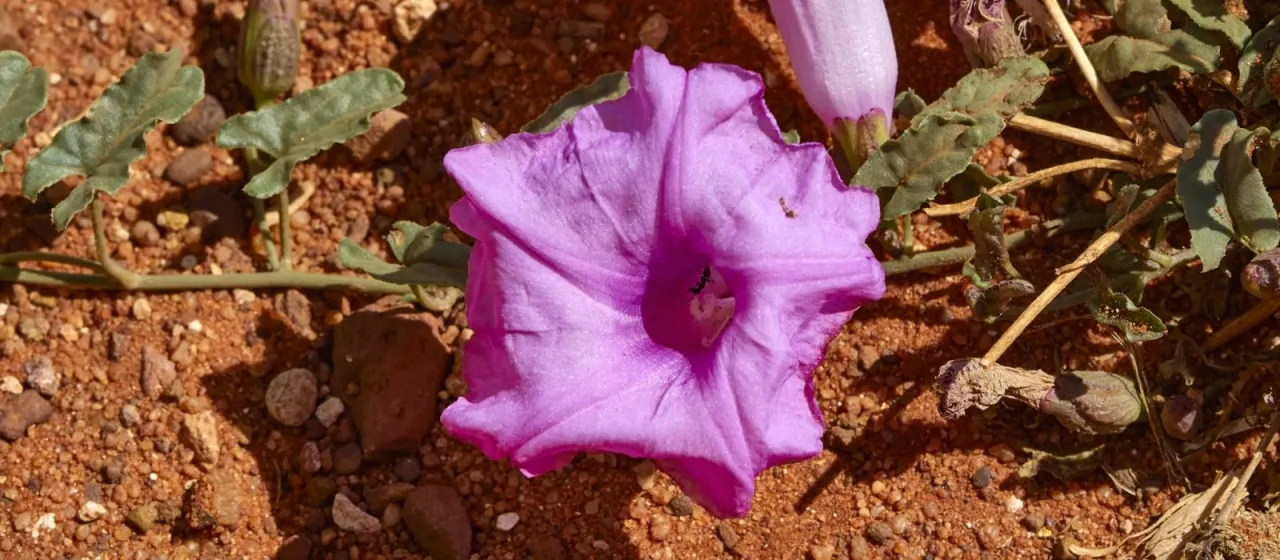
Botanically, the plant is characterized by flexible, twining stems and foliage that exhibits heart-shaped or sagittate morphology. The flowers display the iconic funnel shape typical of the Ipomoea genus, usually presenting in delicate shades that range from white to purplish-pink. These reproductive structures are designed to attract specific pollinators, ensuring seed set even in relatively isolated populations.
When cultivating Ipomoea muelleri, success depends on mimicking its natural arid environment. The substrate must be exceptionally well-draining, such as a sandy or rocky mix, to prevent root rot. Full sunlight is mandatory for healthy development; any significant shading will result in stunted growth and a failure to flower properly. Water should be provided sparingly once the plant is established, allowing the soil to dry out between irrigation cycles.
In terms of practical use, the plant is primarily suited for ornamental purposes in xeriscaping or dry gardening contexts. While generally hardy, it can be susceptible to typical pests like aphids and spider mites, especially when cultivated in containers or poorly ventilated spaces. Disease management involves preventing fungal infections by ensuring adequate air circulation and avoiding overhead watering, which remains the best practice for maintaining plant vigor.