
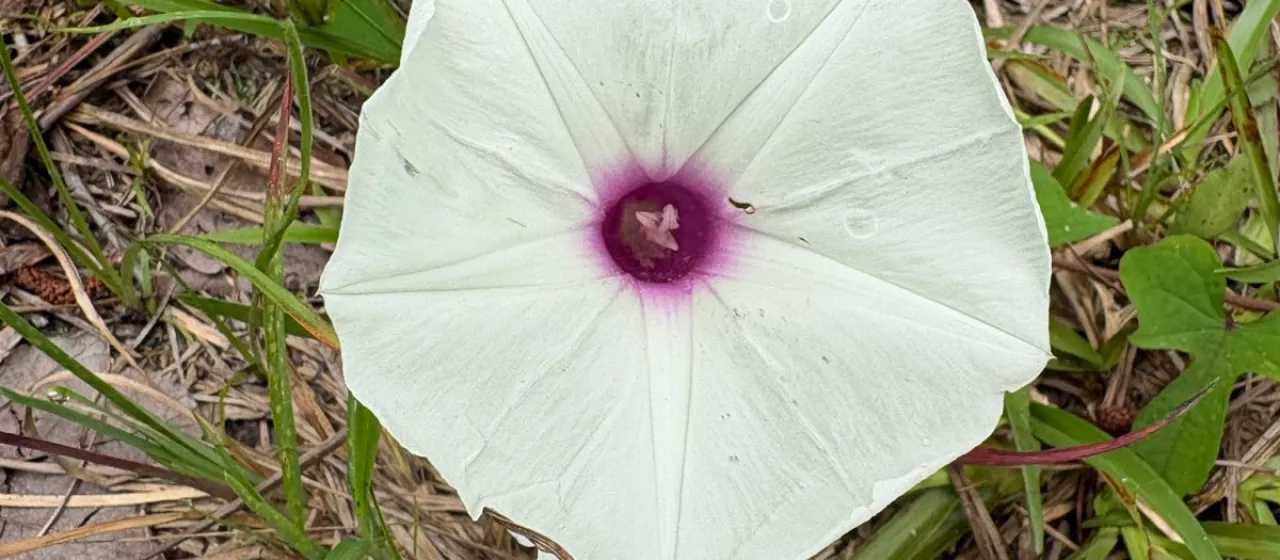
Description
Ipomoea pandurata is a perennial herbaceous plant belonging to the Convolvulaceae family, commonly known as the morning glory family. The species is well-known for its large, tuberous, edible root, which serves as a significant storage organ for nutrients, allowing the plant to survive in diverse environments.
Native to North America, this species is typically found in open fields, thickets, and along roadsides. As an agricultural interest, it thrives in temperate climates where it can fully develop its extensive root system over several growing seasons. Its adaptability makes it an interesting subject for specialized botanical studies.
Botanically, the plant features long, twining stems and distinctive heart-shaped or fiddle-shaped leaves. The flowers are large, funnel-shaped, and usually white with a purple or reddish-brown center. This species is often referred to as the "wild potato vine" due to the appearance of its large, starchy root system.
In terms of cultivation, Ipomoea pandurata requires well-drained, sandy, or loamy soil. It is highly resilient to dry spells once established, but it thrives best when provided with consistent sunlight. The agricultural practice focuses on managing its rapid vine growth through proper trellising and ensuring sufficient nutrient levels in the soil for root development.
The primary directions for economic and practical use are:
- Historical use of the tuberous roots as a starch source for food.
- Medicinal research into the phytochemical properties of its roots.
- Ornamental vertical gardening for fences, screens, and pergolas.
Like many members of the Convolvulaceae family, the plant can be susceptible to pests such as aphids, spider mites, and whiteflies. Diseases related to root rot are common if the soil drainage is inadequate. Integrated pest management and proper irrigation scheduling are essential for maintaining the health of the crop.