
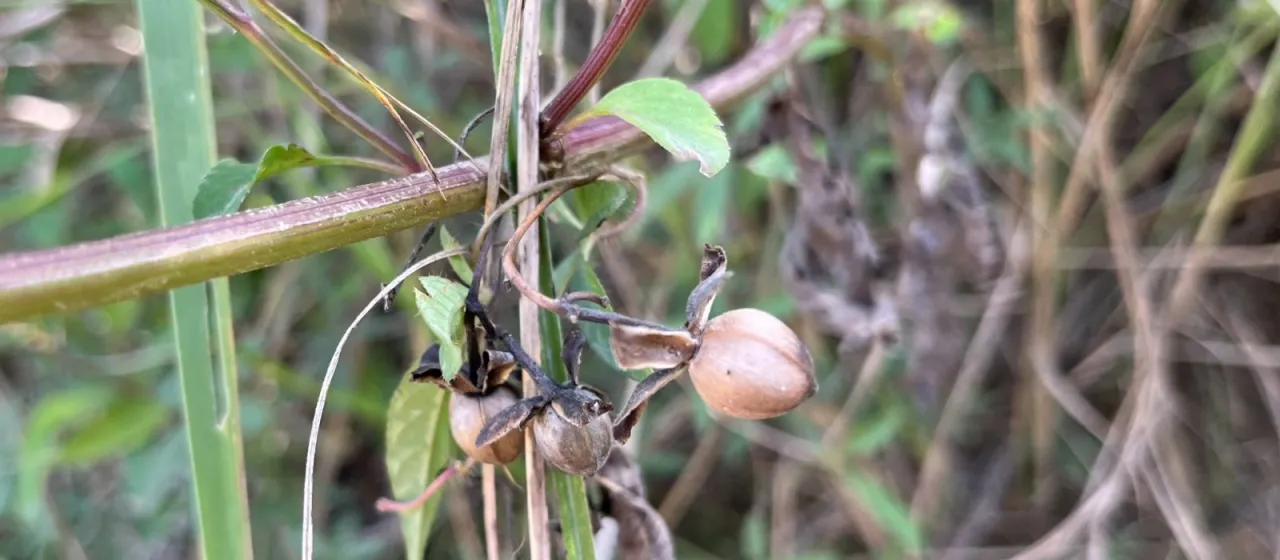
Description
Ipomoea quinata is a perennial climbing plant belonging to the Convolvulaceae family. Known for its distinct foliage and vigorous growth habit, this species is highly valued in its native habitats for its ability to quickly cover surfaces, creating dense green screens that provide both aesthetic and ecological benefits.
The plant originates from the tropical zones of India and parts of Southeast Asia. Within its natural range, it thrives in warm, humid forest clearings and along forest edges, where it utilizes its twining stems to ascend towards sunlight, showcasing an impressive adaptation to competitive tropical environments.
Botanically, the species is defined by its characteristic palmate leaves, usually divided into five lobes, which give the plant its scientific name quinata. Its flowers display the classic funnel shape typical of the Ipomoea genus, often blooming in delicate shades that serve as an important source of nectar for local pollinators.
For successful cultivation, Ipomoea quinata requires well-draining, nutrient-rich soil and a climate that avoids any frost exposure. It is highly sensitive to cold, making it a perennial only in frost-free tropical or subtropical zones; in cooler climates, it must be managed as a tender greenhouse annual or a container plant moved indoors during winter.
The primary horticultural application of this plant is landscape ornamentation, though it also holds potential for soil stabilization in its native geography. Gardeners should monitor the plant closely to prevent and control common pests and diseases, including:
- Spider mites, especially during periods of low air humidity.
- Aphids, which can target young stems and flower buds.
- Powdery mildew, which may occur if the plant is kept in an environment with poor ventilation.