
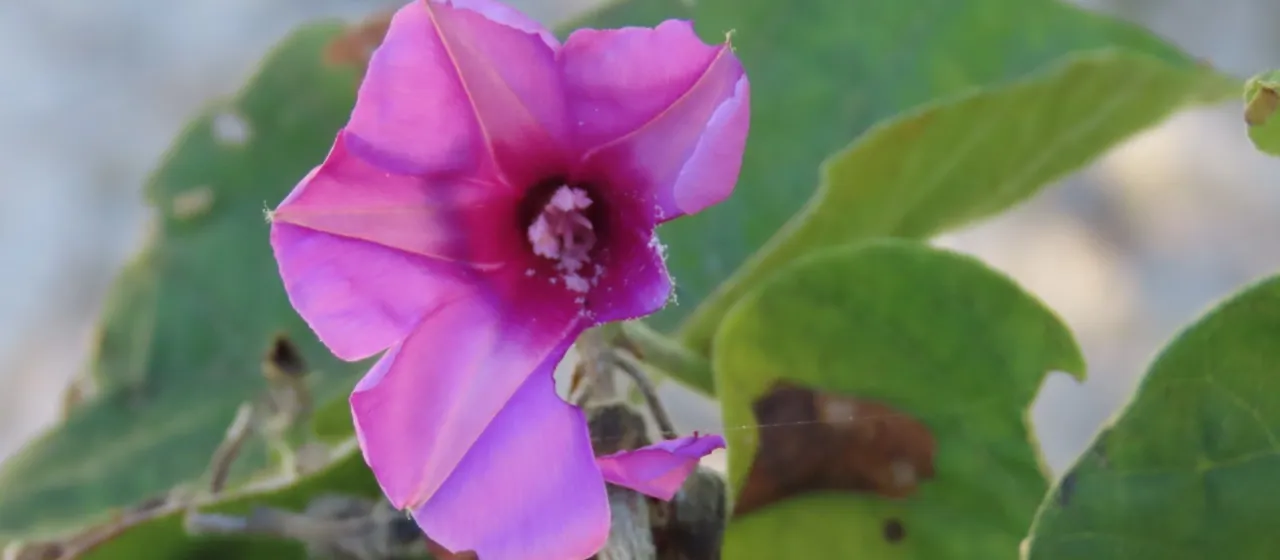
Description
Ipomoea rubens is a herbaceous climbing vine belonging to the Convolvulaceae family. As a perennial plant, it is recognized for its vigorous growth rate and climbing habit. Within agricultural and botanical studies, it is regarded as a significant species for its rapid biomass production and its role in tropical ecosystems.
The plant is native to the tropical regions of Africa and Asia, where it thrives in humid environments and along water margins. It is exclusively adapted to tropical climates and lacks cold tolerance, meaning its cultivation is largely restricted to greenhouses or warmer zones. Temperature stability is essential for the healthy development of this species throughout its lifecycle.
Botanically, the plant features alternate leaves and characteristic funnel-shaped flowers ranging in shades of red and purple. Its stems are highly flexible, allowing it to twine around natural and artificial supports with ease. The root system is quite extensive, facilitating efficient nutrient uptake in moist soil environments, which supports its rapid vertical growth.
Agronomic requirements emphasize the need for high relative humidity and consistent moisture. Soil should be well-drained and nutrient-rich, preferably with a slightly acidic to neutral pH. Providing structural support, such as trellises or netting, is critical to optimize photosynthesis and prevent the foliage from matting on the ground, which can cause fungal issues.
Typical хозяйственные uses for Ipomoea rubens include:
- Landscape architecture and vertical garden design;
- Erosion control in tropical agricultural settings;
- Potential investigation for natural fiber production;
- Ornamental horticulture and biodiversity maintenance.
Common pests include aphids and spider mites, which can become problematic in dry indoor environments or greenhouses. Disease management primarily involves preventing root rot caused by stagnant water. Maintaining proper airflow and sanitation practices in the growth area is the most effective strategy for managing both pest and pathogen outbreaks.