
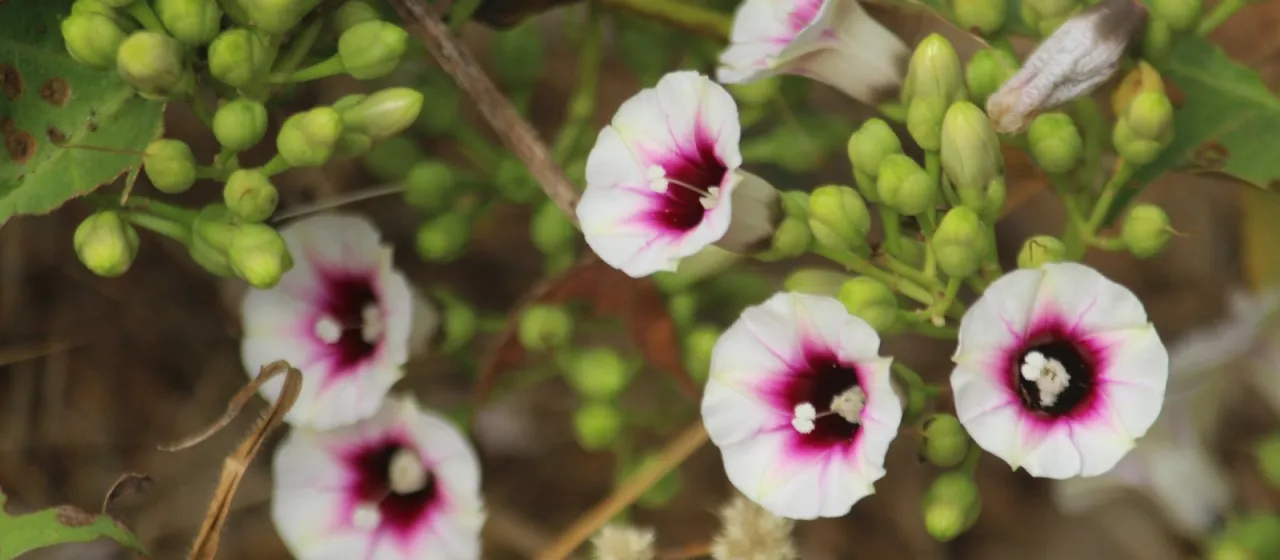
Description
Ipomoea staphylina is a woody climber belonging to the Convolvulaceae family. Unlike many other members of the genus Ipomoea which are herbaceous, this species is noted for its sturdy, woody stems, which allow it to thrive as a significant climbing plant within its natural ecological niche.
Native to the tropical regions of Asia, specifically the Indian subcontinent, this plant has adapted to warm, humid environments. It is frequently encountered in forest edges and thickets, where it uses its vigorous growth habit to reach sunlight. Due to its hardiness in warm climates, it serves as a valuable resource for ecological restoration and ornamental planting.
Botanically, the plant features broad, heart-shaped leaves and funnel-shaped flowers that bloom in clusters. Its root system is extensive and resilient, enabling the plant to establish itself firmly in various soil types. The vine produces seeds that are easily disseminated, allowing the plant to spread effectively under favorable environmental conditions.
Cultivation requires well-drained, fertile soil and full exposure to sunlight. The plant is drought-tolerant once established but performs best with regular irrigation during the growing season. Proper maintenance involves the installation of robust trellises or supports to accommodate the plant's weight and rapid vertical extension.
The primary utility of Ipomoea staphylina lies in ornamental horticulture and landscape architecture for creating natural partitions or shaded areas. While not a major food crop, it remains a subject of botanical study due to its structural properties. Common pests include aphids and mites, which can be managed through standard integrated pest management practices.