
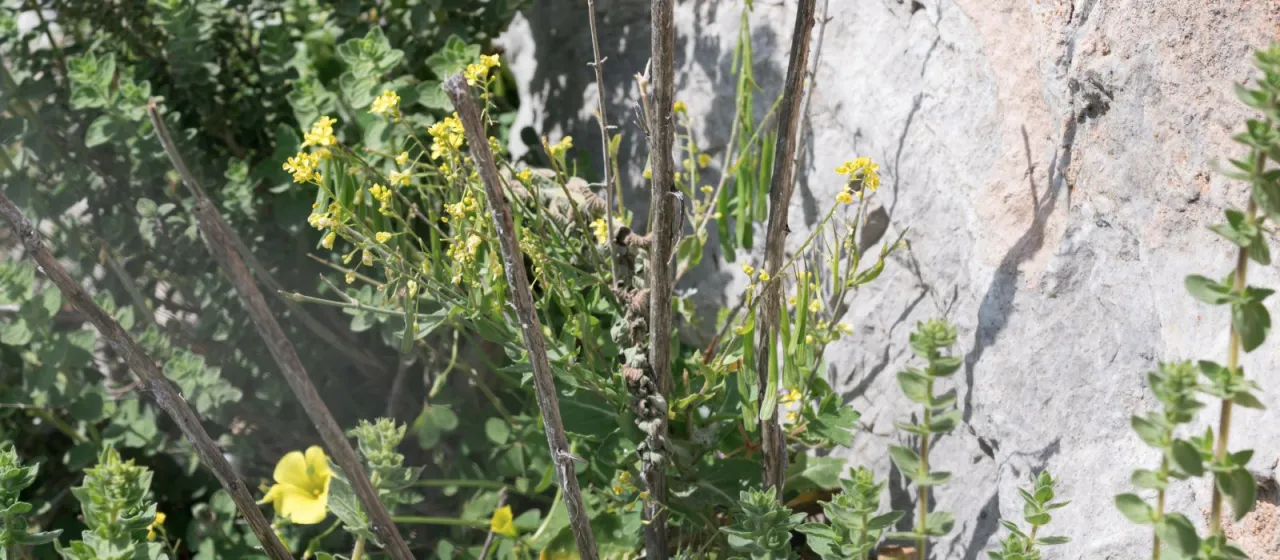
Description
Isatis lusitanica is a herbaceous plant belonging to the Brassicaceae family. Much like its relative, the common woad, it has historically been studied for its potential in producing natural pigments and other chemical compounds. It is a resilient species that has adapted to harsh environmental conditions, making it an interesting subject for specialized agricultural production.
The plant originates from the Mediterranean and parts of Western Asia. Its natural habitat includes rocky, arid, and semi-arid regions. Because of this, the plant is inherently adapted to survive in environments with poor soil quality and significant temperature fluctuations, showing a remarkable tolerance for dry spells.
Botanically, it presents as a biennial or perennial herb with a sturdy taproot. The foliage typically forms a rosette close to the ground, with leaves covered in a glaucous waxy layer to reduce transpiration. The stem develops in the second year, bearing yellow inflorescences typical of the mustard family, which later produce seeds in pods.
Regarding soil and climate, Isatis lusitanica prefers well-drained, neutral to alkaline soils. It performs best in full sunlight and is sensitive to soil compaction and waterlogging. In terms of field management, providing adequate spacing is necessary to facilitate air circulation, which helps reduce the incidence of fungal diseases during wetter months.
Economic potential lies in its role as a source of dye and its suitability for soil stabilization projects. To ensure successful cultivation, farmers should monitor for typical threats:
- Crucifer flea beetles that can defoliate young seedlings.
- Root rot pathogens resulting from excessive moisture.
- Fungal spots, such as Alternaria, under humid conditions.