
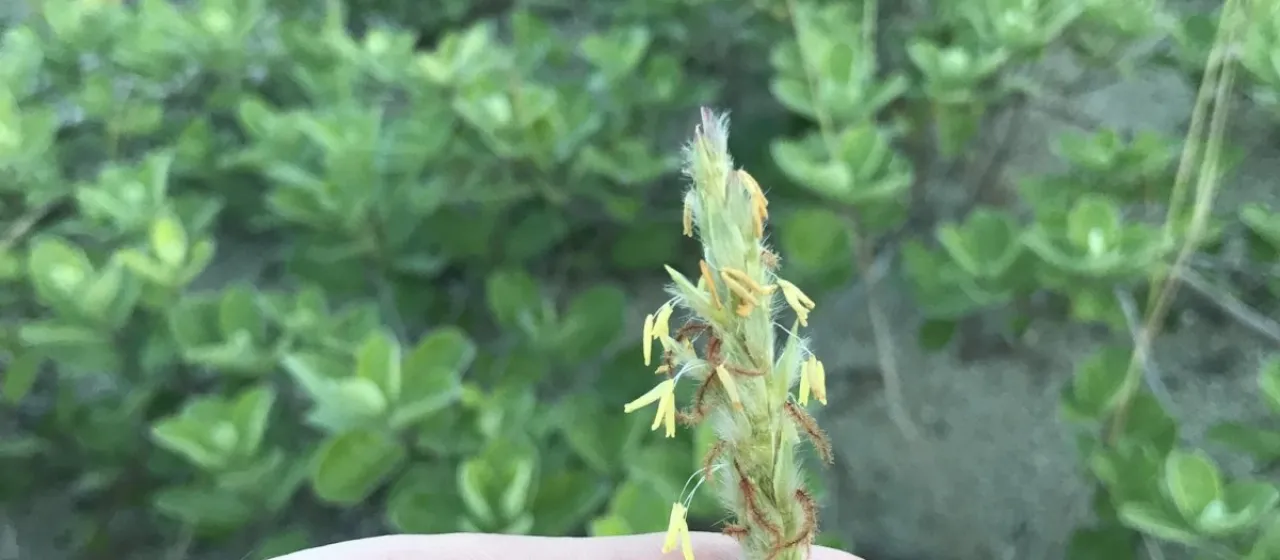
Description
Ischaemum anthephoroides is a perennial grass species belonging to the Poaceae family. Primarily found in coastal habitats, it is recognized for its remarkable ability to thrive in harsh, saline-exposed environments, acting as a natural buffer against maritime erosion along sandy coastlines in East Asia.
The native distribution of this plant includes the coastal regions of Japan and the Korean Peninsula. Because of its ecological niche, it is highly specialized for sandy, nutrient-poor substrates. In these areas, it serves as a pioneer species that stabilizes soil, creating favorable conditions for subsequent colonization by other vegetation.
Botanically, this species is characterized by its robust, creeping rhizomes and stiff, linear foliage. The plant morphology is optimized for wind pollination and physical resistance against sandblast. Its architecture allows it to emerge even after being partially buried by shifting sand, making it a highly resilient grass for coastal management.
Agronomic requirements for Ischaemum anthephoroides are minimal, as the plant is naturally adapted to survive without human intervention. When introduced for soil conservation projects, it requires full sunlight and well-drained, sandy soils. Proper spacing is key to establishing an effective ground cover that can eventually interlock its root systems for maximum soil stability.
The main economic and environmental use of this grass is in the field of ecological restoration and bio-engineering. It is frequently employed in projects aiming to stabilize coastal dunes and prevent coastal erosion. While not typically grown for high-intensity forage, its contribution to maintaining land integrity in fragile ecosystems makes it a valuable asset in specialized agricultural and conservation contexts.
- Excellent tolerance to saline soil conditions.
- Superior ability to stabilize mobile sand dunes.
- High resistance to harsh coastal winds and sunlight.
- Low maintenance requirements in nutrient-deficient areas.