
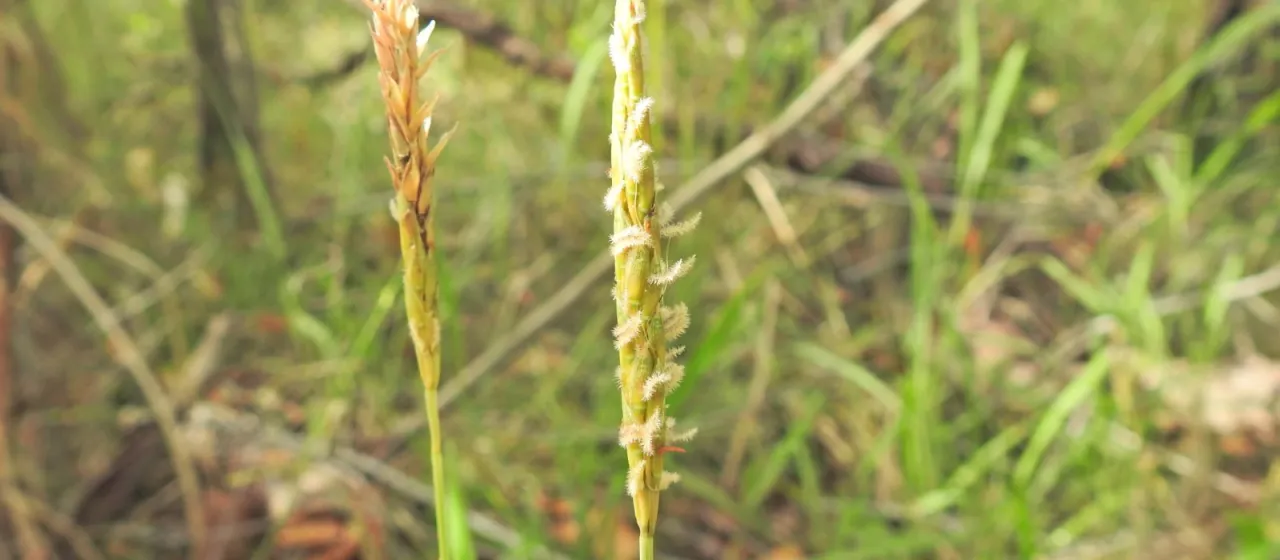
Description
Ischaemum australe is a perennial grass species belonging to the Poaceae family. Known for its resilience in waterlogged environments, this grass has gained attention for its ability to thrive in tropical and subtropical regions, serving as an important component of the local vegetation where soil moisture levels are consistently high.
The native range of Ischaemum australe is primarily located in Australia and parts of the Asia-Pacific region. It is typically found in habitats such as wetlands, floodplains, and riverbanks. Its natural distribution is driven by its physiological tolerance to hypoxic soil conditions, allowing it to occupy niches that are often too wet for conventional agricultural grain crops.
Botanically, this species is characterized by its spreading habit and tough, fibrous root systems. The foliage consists of linear leaf blades, while the inflorescence is organized into racemes, which are a hallmark of the Andropogoneae tribe. The structure of the plant allows it to withstand mechanical stress while maintaining high biomass production throughout the growing season.
Cultivation requirements for Ischaemum australe emphasize the need for adequate moisture and sufficient sunlight. It performs best in soils with high organic content and good water retention. In terms of agronomy, management practices include rotational grazing to ensure the plant remains in a vegetative state, thereby maximizing the nutritional value and palatability for livestock.
- High tolerance to saturated soil conditions.
- Effective erosion control on riverbanks.
- Moderate feed quality for ruminants.
- Low input requirements for growth.
- Responsive to nitrogen fertilization during the peak season.
In agricultural practice, this grass is utilized primarily for grazing and hay production. It is considered a robust forage option in swampy or poorly drained terrains. While it is generally hardy, it can be susceptible to fungal diseases such as leaf blight or rusts if the canopy becomes too dense and airflow is restricted, highlighting the importance of proper stand management.