
Description
Thick-stemmed ischaemum (lat. Ischaemum crassipes) is a perennial grass belonging to the Poaceae family. This species is a notable member of the Ischaemum genus, which is widely distributed across tropical and subtropical regions. It has adapted over generations to thrive in diverse environmental conditions, particularly those favoring high humidity and temperature stability.
The plant is native to East and Southeast Asia, with a distribution range that spans across China, Japan, and neighboring regions. It typically populates wetland meadows, riverbanks, and forest peripheries. Its ability to colonize these habitats is due to its specialized physiological mechanisms that manage water uptake and withstand periodic inundation, common in its native range.
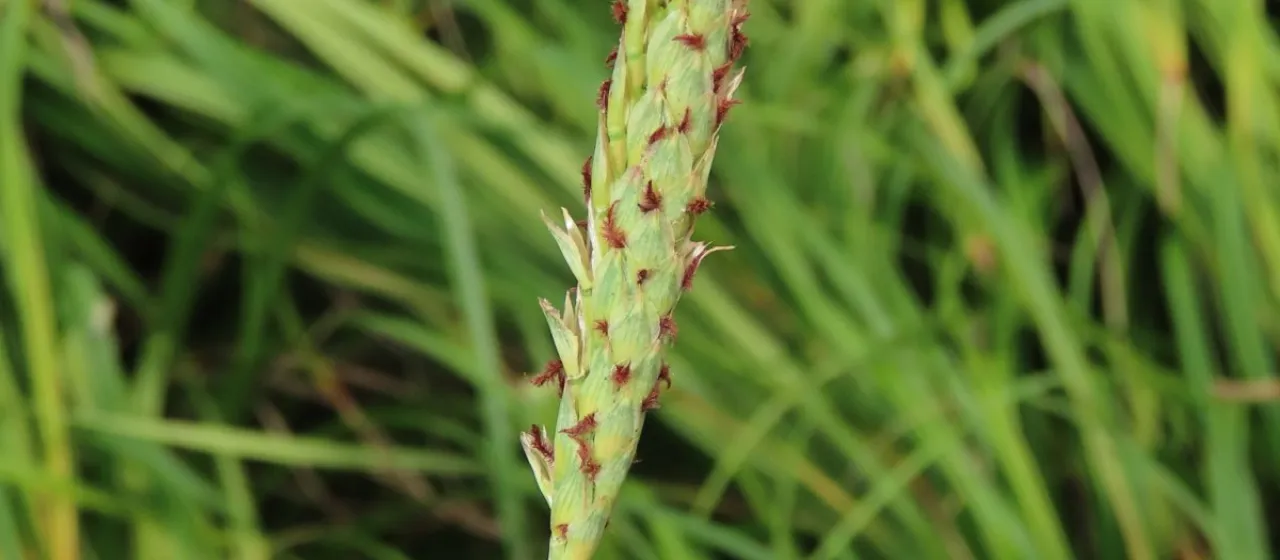
Botanically, Ischaemum crassipes is defined by its robust, thickened culms and vigorous root system. The leaves are typically linear and possess parallel venation, consistent with other grasses. During the reproductive phase, it produces spike-like inflorescences that are essential for seed dispersal and population expansion, showing high fertility in optimal environmental conditions.
Cultivation requirements for this grass include a preference for nutrient-rich, moist, and well-draining soils. While it tolerates wet conditions, it requires adequate sunlight to reach its maximum biomass potential. Agronomic management involves regular monitoring of soil nitrogen levels, as high biomass production of this grass requires sufficient nutrients to maintain growth rates throughout the peak season.
In terms of agricultural utility, Ischaemum crassipes is utilized primarily for forage production, where it provides high-quality grazing material for livestock. It is also valued for soil stabilization in erosion-prone areas near water bodies. Potential challenges for growers include managing common fungal pathogens like rusts and leaf spots, which thrive in humid climates, as well as controlling sporadic insect pest infestations.
- Strong tolerance to saturated soil conditions.
- Effective as a ground cover for erosion control.
- High biomass yield potential in tropical climates.
- Significant nutritional value for ruminant livestock.