
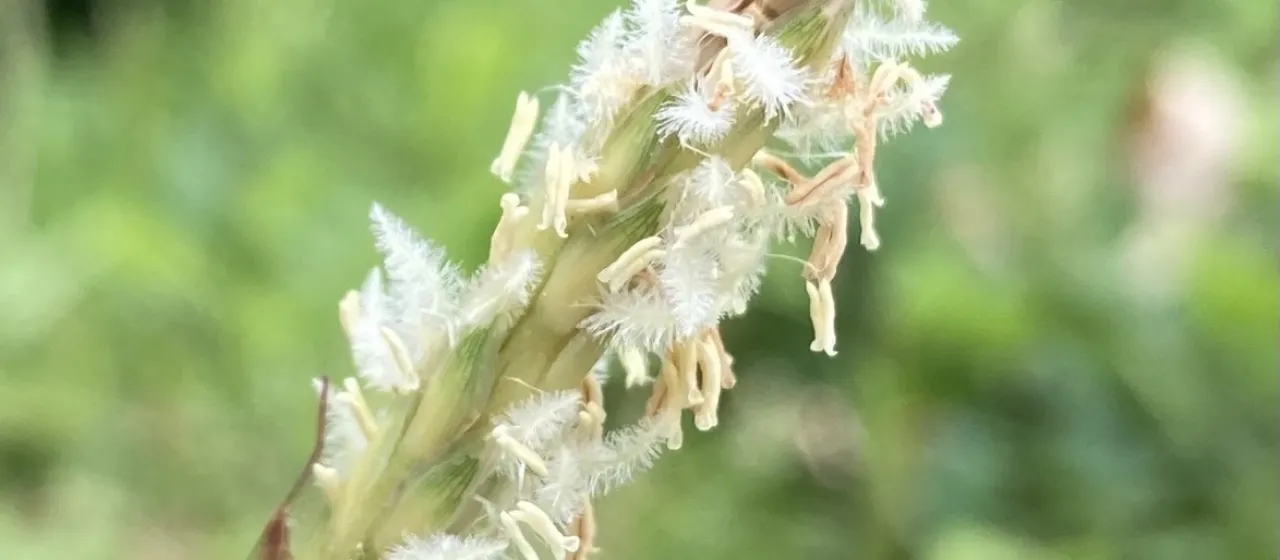
Description
Ischaemum muticum is a perennial grass species belonging to the Poaceae family. Known for its resilience in harsh coastal environments, this plant serves as a vital component in tropical ecosystems, providing ground cover and soil stabilization where many other species struggle to survive.
The species originates from the tropical regions of Asia, specifically along the coastal belts of India and Southeast Asia. It is primarily found in sandy soil habitats, often appearing on beach dunes, along the margins of coastal wetlands, and in tropical lowlands. Its ability to tolerate salinity makes it an essential plant for managing challenging coastal landscapes.
Botanically, this grass is characterized by its creeping rhizomatous habit, allowing it to form dense mats across the ground. The leaves are typically short and end in a blunt, rounded tip, which provides the inspiration for its scientific name. The culms can be prostrate or ascending, generally remaining within a manageable height range of 20 to 50 centimeters.
Regarding agrotechnology, Ischaemum muticum requires high levels of solar radiation and consistent soil moisture for optimal growth. It is remarkably undemanding in terms of soil fertility, thriving in sandy soils where nutrient levels are low. In agricultural settings, it is best utilized for low-input systems where natural adaptation is preferred over intensive fertilization or chemical management.
The primary хозяйственные (agricultural) uses of this plant focus on land management:
- Control of soil erosion in coastal and sandy areas.
- Utilization as a forage crop for livestock grazing in coastal regions.
- Restoration of degraded coastal land habitats.
- Use as a hardy ground cover to suppress weed growth.
While the plant is generally hardy, it can be susceptible to common fungal pathogens if grown in conditions of extreme water stagnation or poor airflow. Effective management involves ensuring proper drainage and monitoring for typical grass-feeding pests. Given its natural adaptation, chemical intervention is rarely required, making it an excellent candidate for sustainable land use practices.