
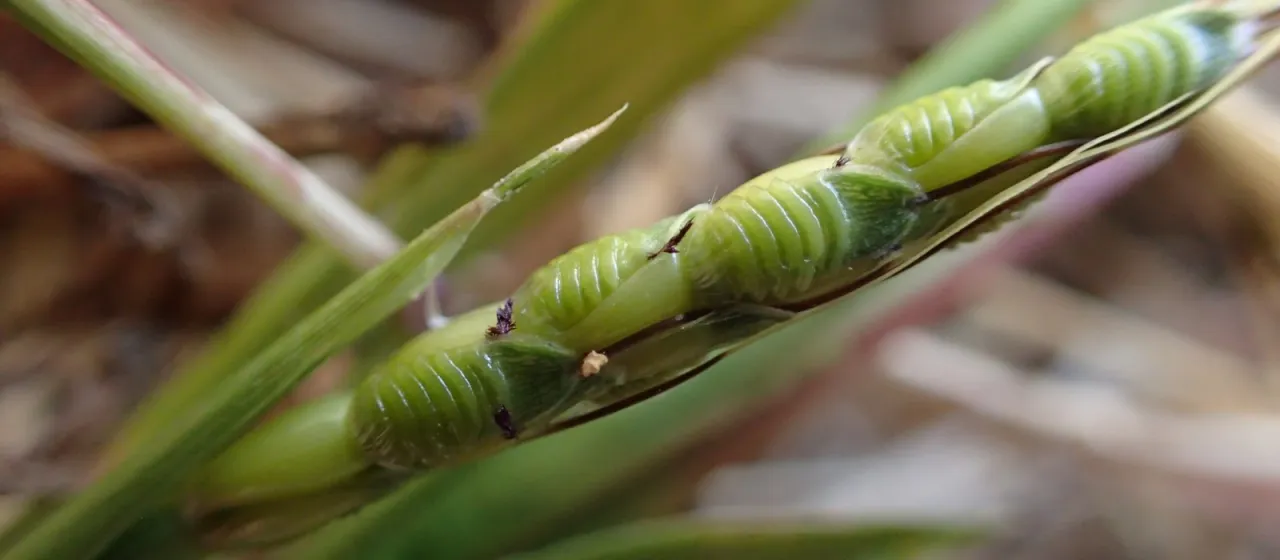
Description
Ischaemum rugosum, commonly known as wrinkle-grass, is an annual grass species belonging to the Poaceae family. While it is not considered a cultivated crop, it is a significant botanical subject in agriculture due to its status as a prolific and highly competitive weed, particularly problematic in lowland rice production systems worldwide.
The plant is native to tropical Asia but has become widely naturalized across tropical and subtropical regions. Its invasive nature allows it to colonize diverse environments, including marshes, irrigated fields, and disturbed soil. Its presence in agricultural landscapes is often associated with high moisture availability, making it a constant challenge for farmers in tropical climates.
Morphologically, wrinkle-grass grows as an annual herb, often reaching heights of nearly one meter. It is distinguished by its inflorescence, which consists of paired racemes that become wrinkled as they mature, giving the plant its common name. The stems are branched and often possess the ability to root at the lower nodes, facilitating aggressive spreading.
Wrinkle-grass thrives in warm, humid conditions and displays a strong preference for saturated soil environments. It is highly adaptable to various soil types, provided there is enough moisture to support its rapid growth rate. The plant's lifecycle is well-synchronized with the rice growing season, allowing it to emerge and mature alongside the main crop, effectively competing for nitrogen and space.
Effective management of this weed is critical to maintaining high agricultural productivity. Control strategies involve an integrated approach:
- Strategic use of pre-emergent and post-emergent herbicides tailored to cereal fields.
- Implementation of water management practices, such as drainage, to disrupt its growth cycles.
- Ensuring the use of high-quality, weed-free certified seeds.
- Crop rotation to break the weed's lifecycle and reduce seed bank density in the soil.