
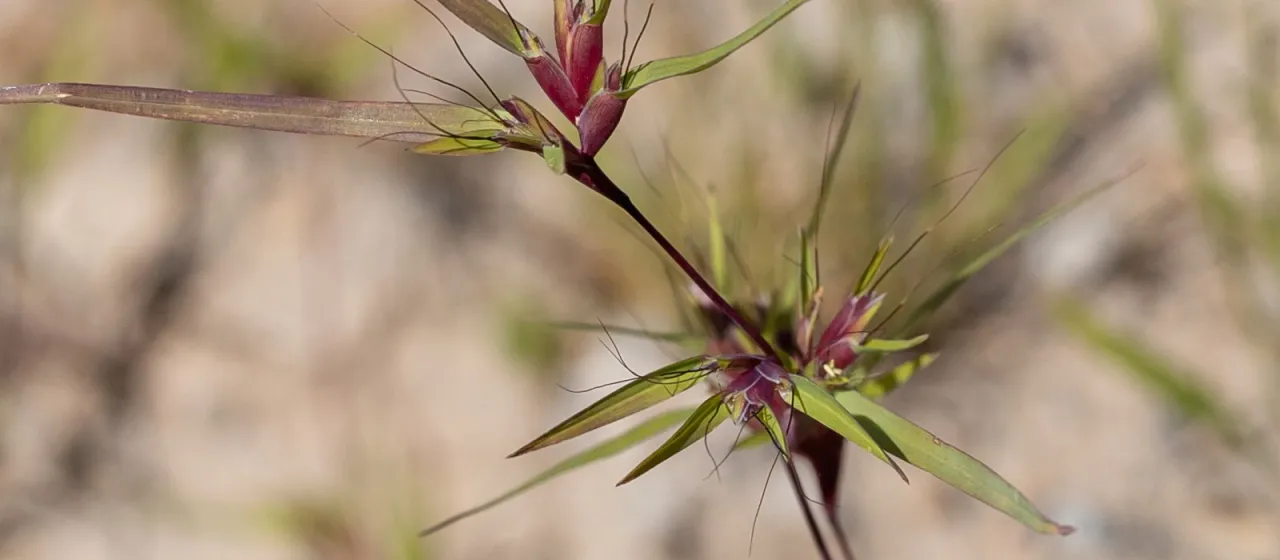
Description
Red flinders grass (Iseilema vaginiflorum) is a significant grass species belonging to the Poaceae family. Native to Australia, it is a highly regarded forage plant that thrives in semi-arid environments. It serves as a vital component of native pasture systems, providing essential grazing resources for livestock across extensive inland plains.
The plant is endemic to Australia, where it is commonly found across various regions characterized by seasonal rainfall patterns. It is particularly well-adapted to heavy clay soils that are prone to cracking during the dry season and periodic inundation during the wet season. This unique habitat tolerance makes it a resilient species for rangeland management.
Botanically, it is a low-growing or decumbent grass that forms dense tufts, allowing it to withstand moderate grazing pressure. Its foliage is slender, and the inflorescences are characterized by being partially enclosed within leaf sheaths. These features enable the plant to persist in challenging, unpredictable environmental conditions while maintaining its nutritional value for grazing animals.
Agronomic requirements are focused on sustainable grazing management. The plant flourishes in open areas with adequate sunlight and prefers fertile, heavy soils. To ensure longevity, practitioners avoid overgrazing, as the plant needs regular rest periods to build root reserves. Proper soil moisture management is critical, as the grass depends on post-rainfall flushes to maximize biomass production.
In terms of agricultural use, this species is highly valued for its palatability and nutritional content during the growing phase. It provides a reliable feed source for cattle and sheep, significantly contributing to livestock productivity. While robust, the grass can be susceptible to locust infestations and occasional fungal leaf diseases if weather conditions remain excessively humid over extended periods.
- High grazing value for cattle and sheep.
- Adaptation to heavy cracking clay soils.
- Important for maintaining rangeland biodiversity.