
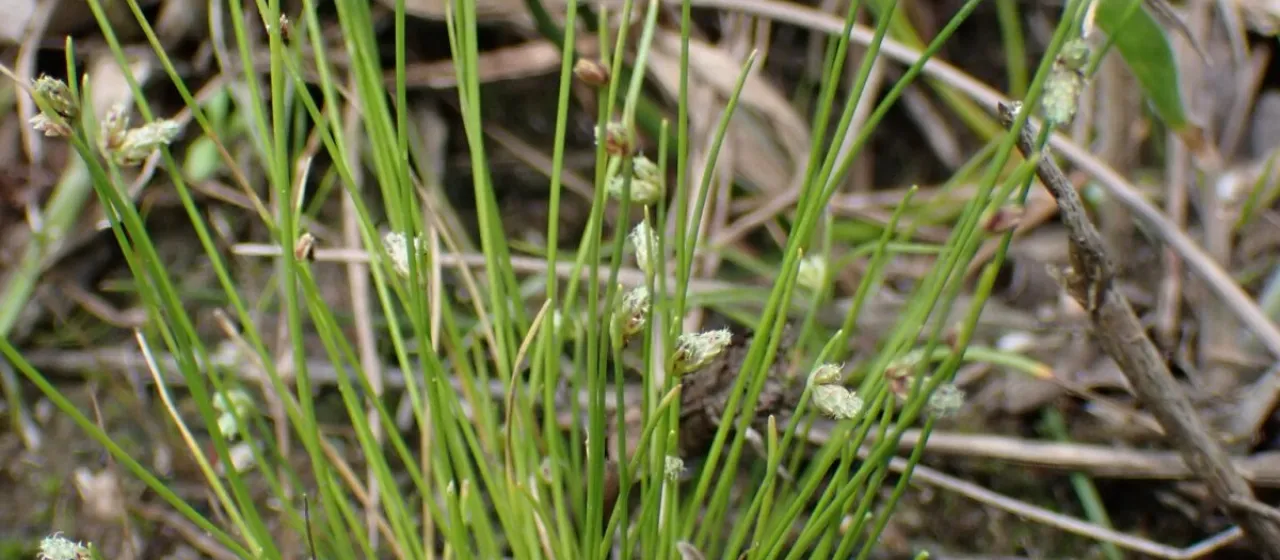
Description
Bristle club-rush (Isolepis setacea) is a perennial herbaceous plant belonging to the Cyperaceae family. Within agricultural and horticultural contexts, it is recognized as a specialized moisture-loving species that thrives in environments ranging from damp soil to shallow water, serving as an important component of riparian habitats.
The native distribution of this plant is remarkably wide, covering vast areas across Eurasia, Africa, and Australia. In the wild, it typically occupies damp sandy soils, the fringes of water bodies, wet meadows, and drainage ditches, where it establishes compact, tufted mats that provide ecological stability to damp soil surfaces.
Botanically, the plant is characterized by its low-growing habit and slender, hair-like stems. The leaves are largely reduced to sheaths, while the small, inconspicuous inflorescences appear as terminal spikelets. This structure gives the plant a delicate, grass-like appearance that makes it a popular choice for specific gardening applications.
Cultivation of Isolepis setacea requires strict attention to moisture levels. The plant is inherently adapted to high-water environments and is sensitive to desiccation. In an agricultural or landscaping setup, it is essential to ensure that the substrate remains consistently moist or even waterlogged, mimicking its natural habitat to prevent the die-back of the root system.
The primary use of the plant is in ornamental landscaping, specifically for water garden features, pond margins, and humid greenhouse environments. While it does not serve a traditional agricultural purpose in terms of crop yield, its role in ecological restoration of wetlands and its aesthetic value in landscape design are significant.
- Thrives in wet conditions
- Tolerance to shallow flooding
- Compact, tufted growth habit
- Low nutritional requirements
Disease issues are generally linked to poor water circulation or stagnant conditions that promote fungal growth. Pests are relatively uncommon but may include aphids or other moisture-loving invertebrates that occasionally infest the soft stems, which can be managed by maintaining adequate airflow and avoiding overly dense plantings.