
Description
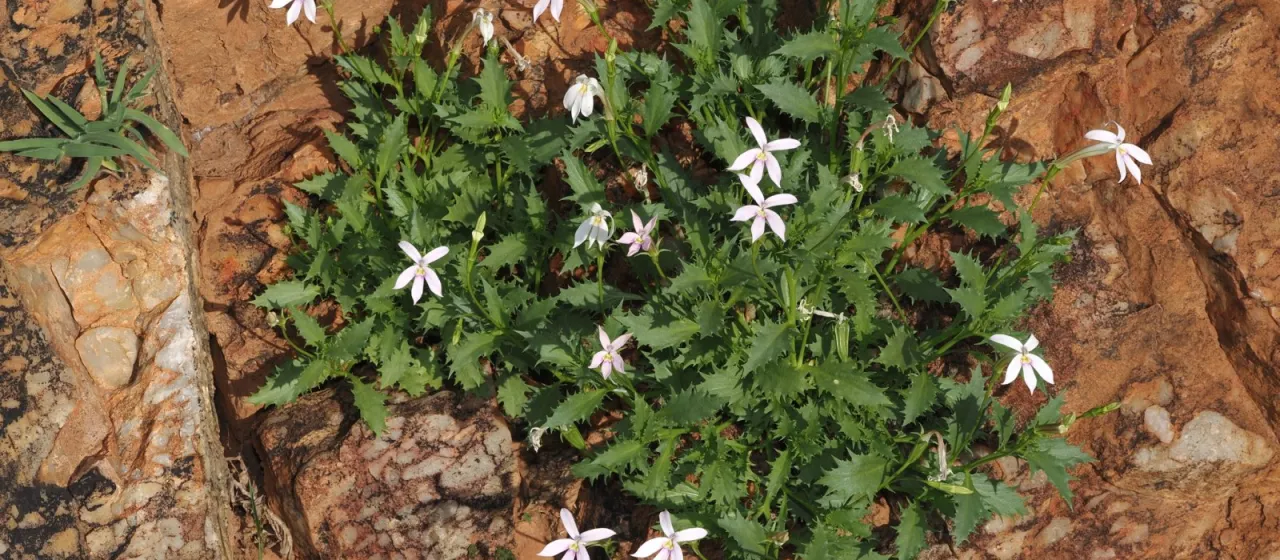
Rock isotoma (Isotoma petraea) is a distinctive perennial herbaceous plant belonging to the Campanulaceae family. Renowned for its resilience, it naturally thrives in rocky environments and cliff crevices, an evolutionary adaptation that defines both its growth habit and common name.
Native to arid regions of Australia, this plant has adapted to harsh environmental stressors, including long periods of drought and intense sunlight. Its natural habitat is typically characterized by shallow, stony soils, which has shaped its biological ability to flourish where other species would struggle.
Botanically, the plant develops a compact rosette of deeply lobed leaves. During the flowering stage, it produces elegant star-shaped flowers with elongated tubes. The color spectrum ranges from pale blues to deep purples, making it a visually appealing subject for specialized horticultural projects.
Cultivation of Isotoma petraea demands strict attention to substrate drainage. The plant thrives in sandy or gravelly soils where water does not pool. While it is drought-tolerant, consistent light moisture during the primary growing season supports better floral display and overall plant vigor.
- Full sun exposure is preferred for optimal development.
- Excessive soil moisture is the primary cause of root failure.
- Poor, gritty soil mixes prevent lanky growth.
- Minimal fertilization is generally sufficient for this species.
In landscaping, it is highly valued for rock gardens, dry-slope planting, and drought-resistant borders. While generally robust, it can be susceptible to common greenhouse pests like aphids or spider mites if air circulation is inadequate. Maintaining a dry, well-ventilated environment is the best defense against fungal pathogens and rot.