
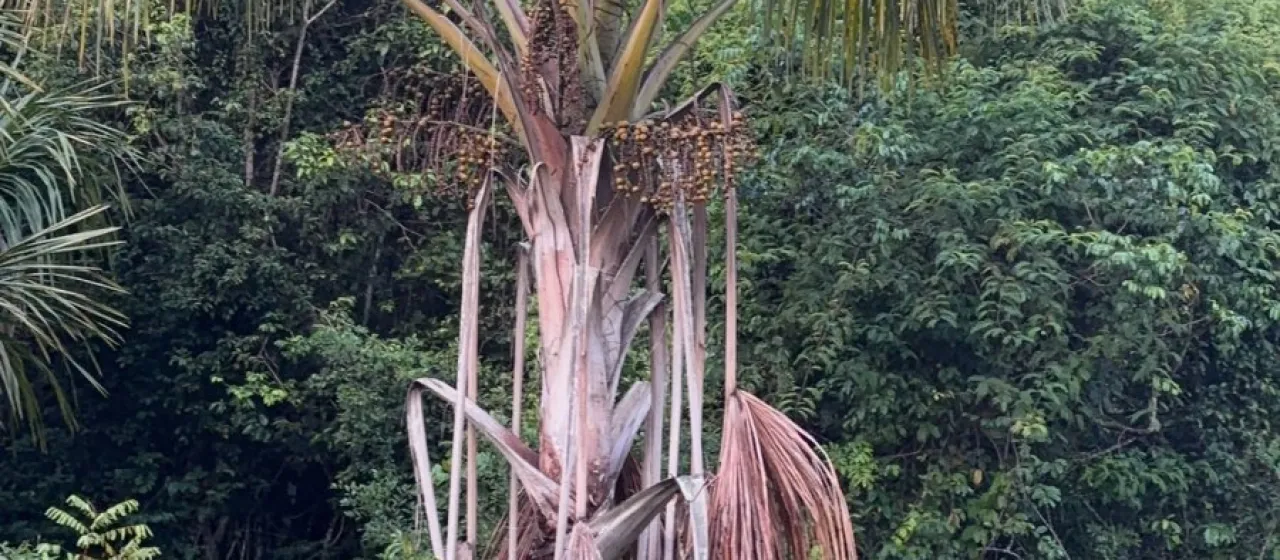
Description
The Ita palm (Mauritia flexuosa L. f.), scientifically classified within the Arecaceae family, is a majestic tropical tree. Known locally by various names, it serves as a cornerstone of swampy ecosystems across the South American continent.
Native to the vast floodplains of the Amazon and Orinoco basins, this plant is uniquely adapted to thrive in waterlogged terrains. Its natural range extends through tropical South America, where it forms dense, productive stands often referred to as 'morichales'.
Botanically, the species is distinguished by its towering height, which can reach over 30 meters, and its iconic, large fan-shaped leaves. The plant is dioecious, and its fruit is covered with reddish, tile-like scales. These fruits are highly prized for their nutritional density, particularly their high content of vitamin A and essential fatty acids.
Cultivation of the Ita palm requires a specific tropical environment with high humidity and consistent rainfall. The tree prefers acidic, organic-rich soils that remain saturated with water for most of the year. Successful agricultural practices focus on maintaining these wetland conditions and ensuring protection from herbivores during the early stages of plant development.
In terms of economic usage, every part of the Ita palm is utilized. The fruit pulp is processed into nutritious juices, oils, and ice creams, while the leaves provide durable fibers for weaving baskets, hammocks, and ropes. Additionally, the wood is sometimes utilized in rural construction due to its inherent resistance to decay in high-moisture conditions.
- Excellent source of carotenoids and healthy fats.
- High adaptability to flooding conditions.
- Sustainable fiber production for handicrafts.
- Ecological importance for wetland restoration.