
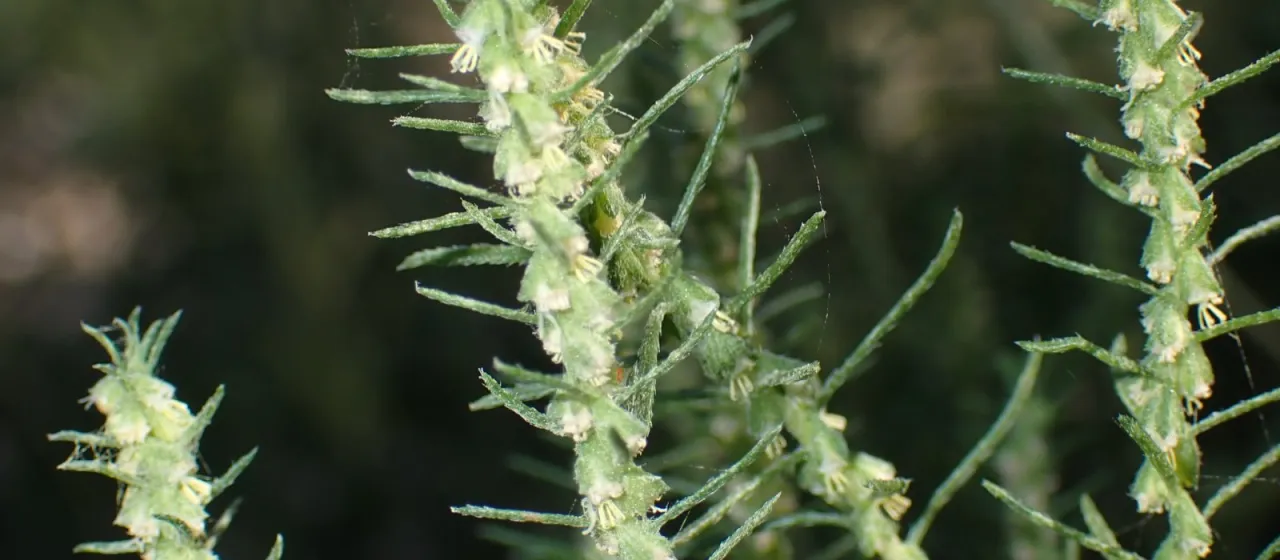
Description
Rough-leaved sumpweed (Iva asperifolia) is a herbaceous perennial plant belonging to the Asteraceae family. While not a conventional agricultural crop, it is a significant species in botanical studies and agricultural ecology due to its distinctive growth patterns and high adaptability to diverse soil conditions within its native range.
Originating primarily from North America, this species is commonly found in riparian habitats, moist sandy soils, and disturbed areas. Its ability to thrive in fluctuating moisture levels makes it an effective colonizer of sites where traditional crop species might struggle due to hydrological instability or soil structure limitations.
The morphology of Iva asperifolia is defined by its rough, textured leaves and robust, branching stems. As a member of the Asteraceae family, it produces small flower heads that contribute to its reproductive success. Its foliage and stem structure allow the plant to withstand environmental stresses, effectively protecting its vascular system from evaporation during intense seasonal heat.
From an agricultural standpoint, this plant requires specific environmental conditions to establish, primarily moist and nutrient-rich soils. While it lacks commercial value as a food or fiber crop, it is recognized for its competitive potential. Agricultural managers often monitor for its presence in fringe areas of fields to prevent competition for sunlight and nutrients with desired cash crops.
Effective management strategies against Iva asperifolia when it appears as a weed include mechanical disturbance, such as regular discing or mowing before seed maturation. Chemical control can be achieved using selective herbicides approved for broad-leaved perennials. Preventive measures focus on maintaining dense crop cover to suppress seedling emergence and ensuring that irrigation management does not favor the plant's natural habitat preferences.