
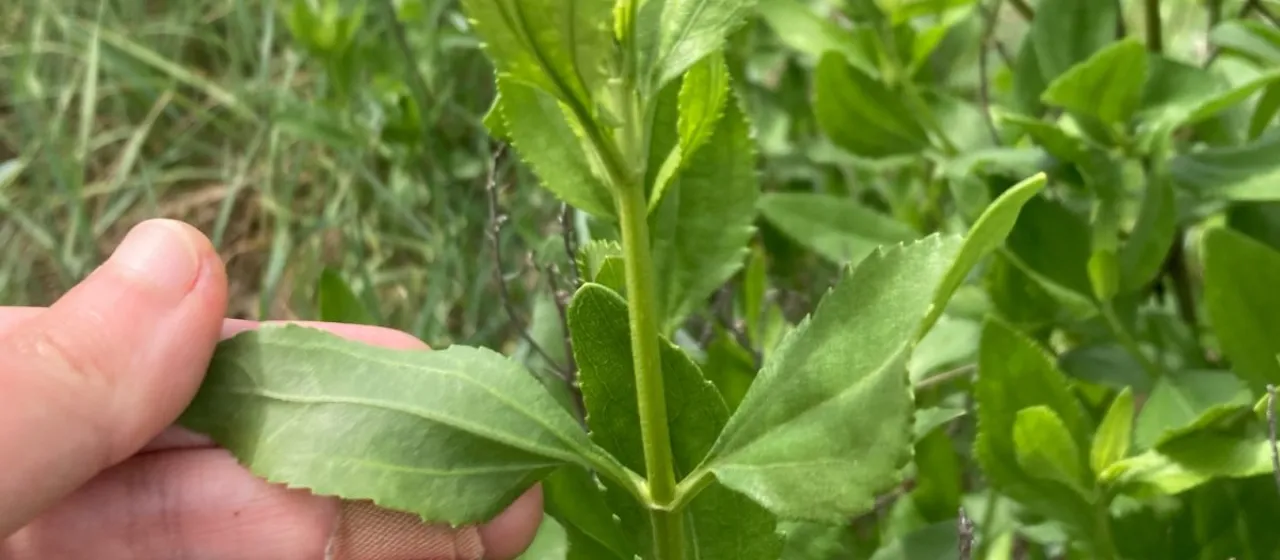
Description
Marsh elder (Latin Iva frutescens) is a perennial shrub belonging to the Asteraceae family. Often confused with true willows due to its common name, this species is a distinct halophytic plant perfectly adapted to the harsh conditions of coastal salt marshes and brackish environments.
Native to the Atlantic and Gulf coasts of North America, this plant has evolved to thrive in soils where salinity levels would be toxic to traditional agricultural crops. It plays a significant role in its natural ecosystem by stabilizing sediment and providing shelter for coastal fauna within the intertidal zones.
Botanically, Iva frutescens is characterized by succulent, lanceolate leaves with serrated edges and a glandular surface that helps manage salt excretion. It can reach heights of up to 3 meters, featuring a woody stem base that supports dense clusters of greenish-white flower heads produced in late summer and autumn.
From an agrotechnical perspective, the plant requires high solar exposure and prefers saline, saturated soils. Unlike conventional crops, it thrives without excessive freshwater irrigation, making it an excellent candidate for agricultural land that has become degraded or salinized due to climate change or poor irrigation practices.
Its primary agricultural uses include coastal restoration and phytoremediation projects, where it helps remove excess minerals from the soil. Recent studies explore its potential as a sustainable biomass source in environments where other energy crops fail, highlighting its resilience to standard plant diseases and pests that plague typical farm environments.
- Extreme tolerance to high soil salinity (halophyte).
- High sunlight requirement for optimal growth.
- Significant potential for phytoremediation of brackish lands.
- Low susceptibility to common pests and agricultural pathogens.
- Ability to withstand periodic tidal flooding.