
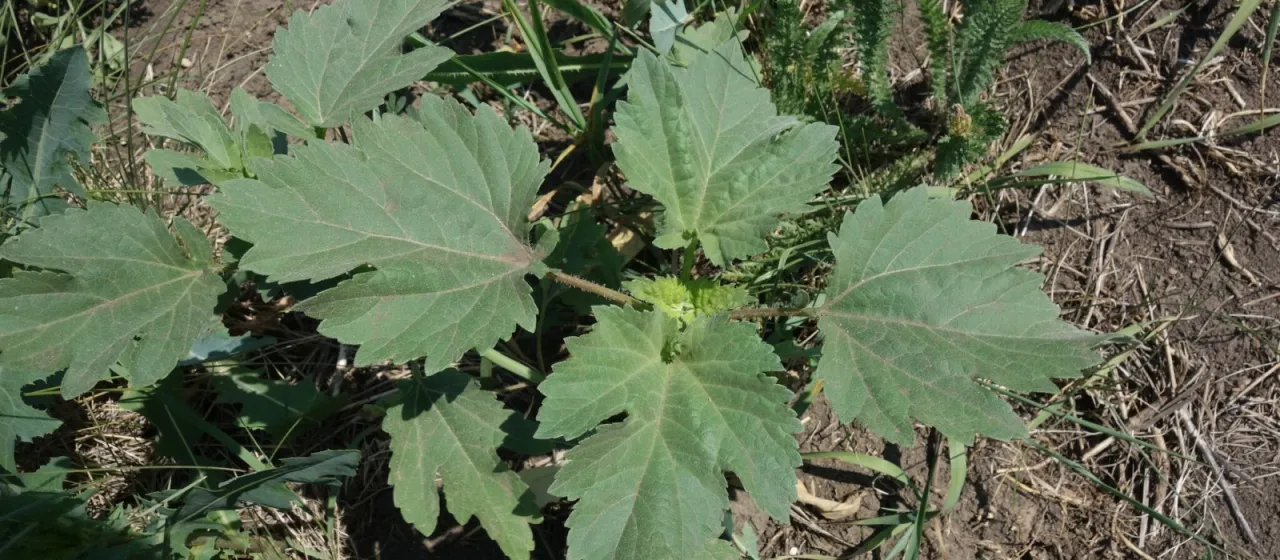
Description
Marsh elder (Iva xanthiifolia Nutt.) is an annual herbaceous plant belonging to the Asteraceae family. While it is not a cultivated crop, it is a significant agricultural weed known for its aggressive growth habit and competitive nature in various cropping systems throughout the temperate regions of the world.
Originating from North America, the species has successfully expanded its range across Europe and parts of Asia. It thrives in open, sunny environments, commonly colonizing field edges, irrigation ditches, and heavily disturbed agricultural lands where soil fertility is high and competition for light is essential for its development.
Botanically, it is characterized by a stout, branched stem that can grow up to 2.5 meters in height. The leaves are large, opposite, and roughly toothed, resembling those of the cocklebur. The plant produces dense, panicle-like inflorescences that generate a high volume of wind-dispersed pollen and seeds, contributing to its rapid spread across agricultural landscapes.
In terms of management, the species requires consistent agronomic intervention. It is particularly competitive for moisture and mineral nutrients, often outperforming major crops such as corn, sunflowers, and soybeans. Successful control strategies typically involve:
- Implementing diverse crop rotations.
- Early-season mechanical tillage to eliminate seedling flushes.
- Judicious use of post-emergence herbicides.
From an agricultural standpoint, Marsh elder has no positive economic value and is considered a serious pest. It acts as an alternate host for several plant pathogens and insects, further complicating integrated pest management programs. Its pollen is also a potent allergen, posing risks to farm workers during the late summer and early autumn flowering stages.