
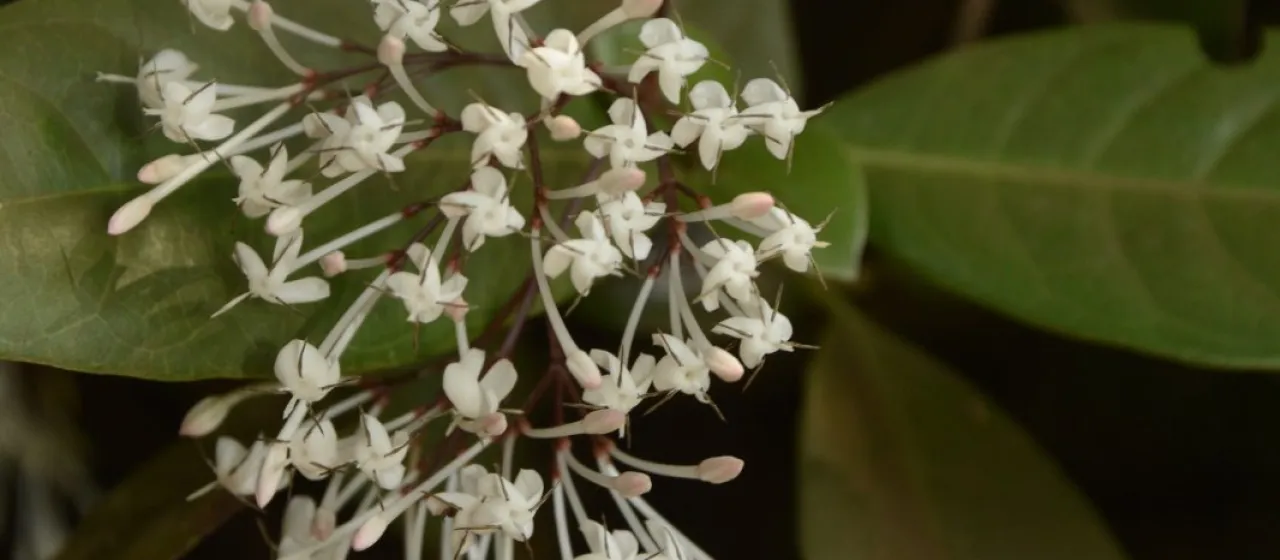
Description
Ixora nigricans is a perennial woody plant belonging to the Rubiaceae family. Known for its lush evergreen foliage and characteristic dense clusters of flowers, this species represents a significant biological component of tropical forest ecosystems in South and Southeast Asia.
The origin of Ixora nigricans is linked to the tropical regions of India and surrounding territories. In its native habitat, it thrives in shaded or semi-shaded forest understories, benefiting from high humidity and consistent rainfall. Its adaptation to these conditions makes it a popular subject for botanical collections and specialized greenhouse environments worldwide.
Botanically, the plant is distinguished by its elliptical, leathery leaves and specialized inflorescences. The specific epithet "nigricans" reflects the color transformation of the plant tissues, which often darken upon maturity or decay. The plant structure is robust, allowing for significant longevity under proper care conditions.
Successful cultivation requires a well-structured, acidic soil mix with high organic content and excellent drainage capacity. It is highly sensitive to irrigation water quality; chlorine and high lime content in water can lead to chlorosis. Maintaining an ambient temperature above 18 degrees Celsius is critical for metabolic processes and flower induction.
- Use of high-quality, acidic substrate for container growth.
- Regular misting to maintain the required atmospheric humidity.
- Scheduled pruning to manage height and encourage lateral branching.
- Monitoring for sap-sucking insects like mealybugs and spider mites.
The primary economic and practical use of Ixora nigricans is within the horticultural and landscaping sector. It serves as an excellent decorative shrub for tropical gardens or as a focal point in conservatory displays. Pathological issues are generally limited to fungal root rots caused by over-irrigation and poor aeration of the growing medium.