Kudzu
Pueraria montana (Lour.) Merr. var. lobata (Willd.) Maesen & S. M. Almeida ex Sanjappa & Predeep
Description
Kudzu is a perennial vine belonging to the Fabaceae family, recognized for its aggressive growth habit and substantial biomass production. In agricultural contexts, it is appreciated for its deep root system which creates significant starch reserves, and its ability to fix atmospheric nitrogen, contributing to soil fertility improvement.
The species originated in East Asia, including regions across China and Japan. Today, it is cultivated in various subtropical and temperate zones globally. Its rapid expansion is facilitated by high light intensity and adequate moisture, which allow the plant to dominate land areas and outcompete weed species in favorable climatic conditions.
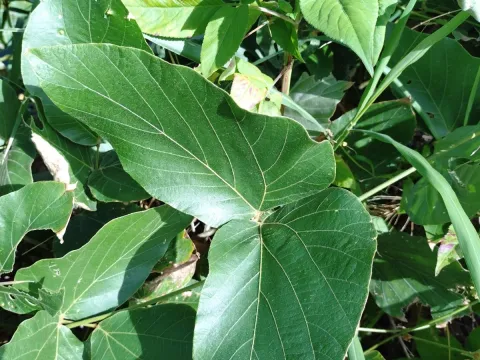
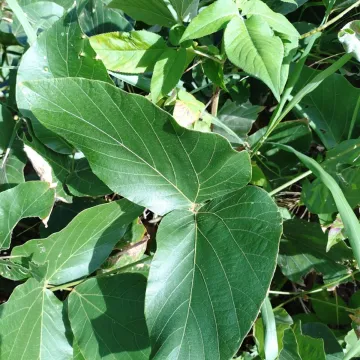
Botanically, the plant consists of thick, woody vines reaching great lengths, adorned with broad, trifoliate leaves. The flowers are purple, fragrant, and typically arranged in long clusters. The most critical agricultural organ is the massive tuberous root system, which serves as an energy reservoir and is the primary target for commercial starch extraction.
Successful cultivation requires deep, well-drained soils and a climate free from severe, prolonged freezes. Agronomic practices emphasize establishing the crop in well-prepared seedbeds and managing the vine's reach to prevent unwanted spread. Regular maintenance includes monitoring for excessive density and ensuring sufficient soil moisture during the initial stages of establishment.
Kudzu serves several economic purposes: it is utilized in the food industry as a source of premium starch, and its foliage is valued as a highly nutritious fodder for livestock. Furthermore, the stalks provide fiber for textile applications, and the plant remains a premier choice for erosion control projects in degraded agricultural landscapes.
Common issues affecting production include fungal diseases such as leaf spots and root rots, often exacerbated by poor drainage. Pests such as root-knot nematodes and various beetles can also pose a threat to the crop's vigor. Integrated pest management, focusing on biological controls and proper site selection, is essential for maintaining a healthy and productive stand.
Photo gallery