
Description
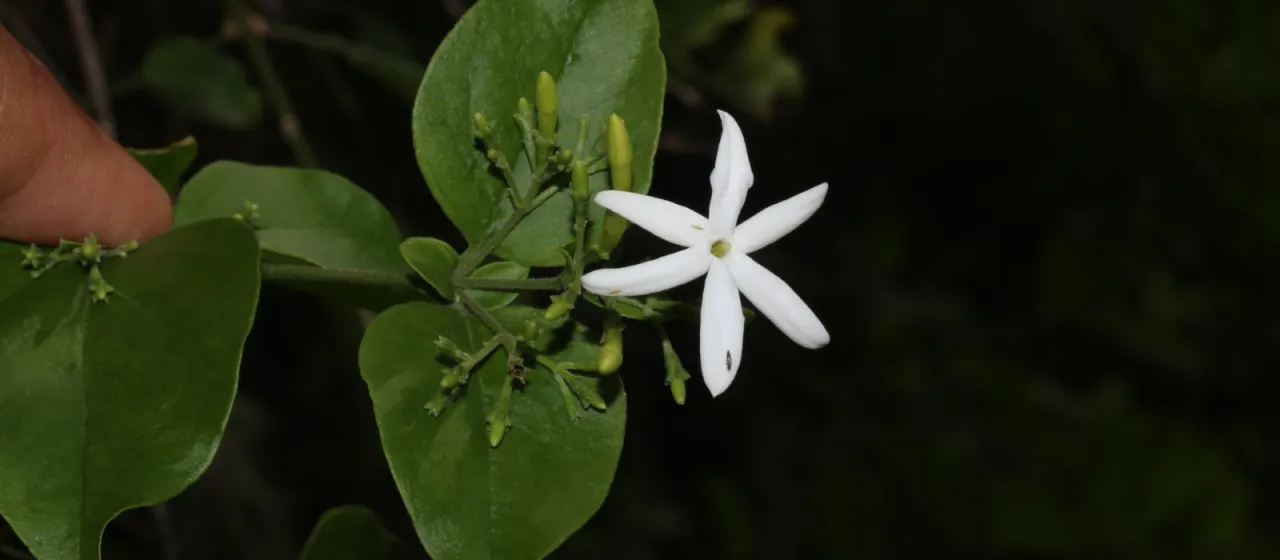
Jasminum auriculatum is a perennial evergreen shrub belonging to the Oleaceae family. It is globally recognized for its highly fragrant white flowers that produce a rich, sweet scent. This species is extensively cultivated in tropical and subtropical regions for its significant value in the fragrance and essential oil industries.
The plant originates from India and Southeast Asia, where it thrives in warm, humid conditions. It is not frost-hardy and requires a stable, frost-free environment to maintain its health and productivity. In regions where temperatures drop significantly, cultivation is typically restricted to protected environments or greenhouses.
Botanically, the plant is characterized by its simple or trifoliate leaves, which feature distinctive small auricles at the base of the petiole, justifying its scientific name. The plant grows as a rambling shrub or a woody vine, which often requires structural support. The flowers are small but appear in dense clusters, making them highly efficient to harvest.
The agronomic management of Jasminum auriculatum demands fertile, well-drained loamy soils. Irrigation must be managed carefully, as the plant requires moisture for growth but suffers from root rot if water stagnation occurs. Regular fertilization with organic matter or balanced NPK fertilizers is recommended to ensure continuous bloom cycles throughout the growing season.
- Sunlight: Thrives in full sun to partial shade for optimal flowering.
- Soil: Prefers a pH range of 6.0 to 7.5.
- Pruning: Periodic trimming is essential to maintain shape and promote new growth.
- Pest Control: Vigilance against mites, whiteflies, and aphids is mandatory.
Commercially, the crop is primary utilized for the extraction of jasmine absolute, a cornerstone ingredient in fine perfumery. Beyond its industrial use, the plant is valued for its ornamental appeal in landscaping, particularly in tropical gardens. Its aesthetic and aromatic qualities make it a popular choice for vertical gardening and ornamental borders in warm climates.