
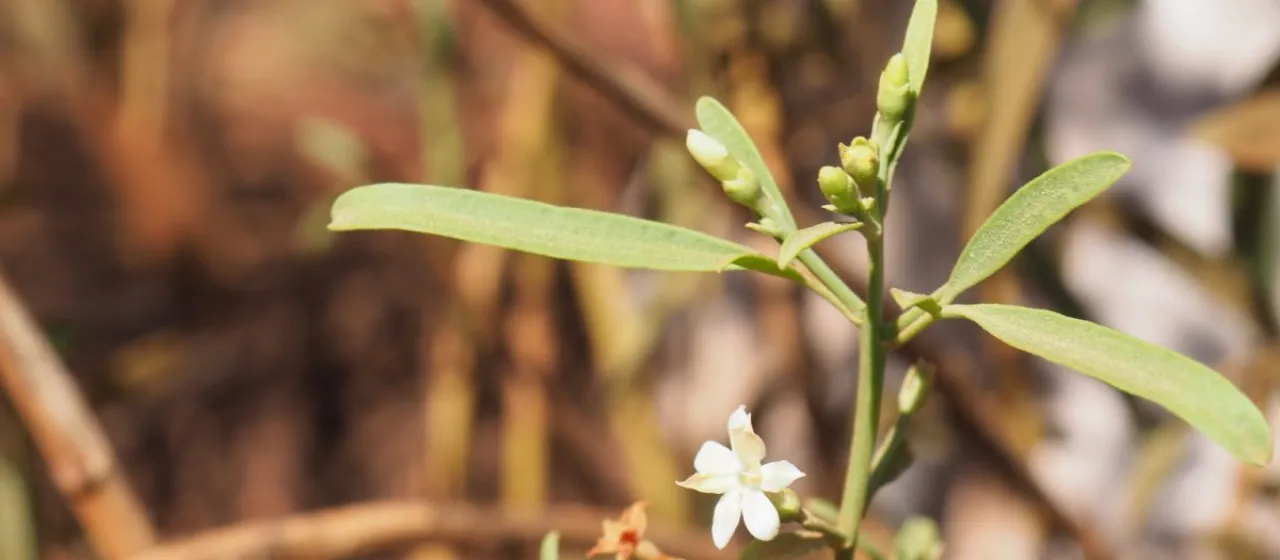
Description
Jasminum didymum is a perennial evergreen climber belonging to the Oleaceae family. As a woody vine, it utilizes tendrils and its climbing habit to ascend various structures, making it a popular choice for vertical landscapes. The plant is well-regarded for its glossy foliage and its ability to provide a lush, year-round greenery cover in suitable environments.
The species originates from tropical and subtropical regions, predominantly found in Australia and various Pacific islands. Because of its native climate requirements, it thrives in warm, frost-free areas. In temperate zones, it is widely cultivated in greenhouses, conservatories, or as a container plant that must be moved indoors during colder seasons to prevent frost damage.
Botanically, the plant is characterized by its compound leaves, which feature a glossy texture and deep green hue. The flowers are typically small, white, and organized in clusters, releasing a delicate fragrance during the peak blooming period. The root system is robust, supporting rapid vegetative growth, which allows the plant to cover walls, trellises, or pergolas effectively within a single season.
Successful cultivation of Jasminum didymum requires well-draining, fertile soil with a neutral to slightly acidic pH. The plant performs best in locations that provide plenty of bright, indirect sunlight. Watering should be consistent, ensuring the substrate remains moist but never waterlogged, as excessive dampness can lead to root rot. Adequate ventilation is also crucial to prevent fungal infections.
- Requires sturdy support structures for vertical growth.
- Regular pruning is essential to maintain the desired shape.
- Balanced fertilization is recommended during the growing season.
- Susceptible to common pests such as aphids and spider mites.
- Monitoring for humidity levels in indoor environments.
The primary use of Jasminum didymum is in ornamental horticulture, where it serves as a decorative element for both indoor and outdoor spaces. It is highly valued for its aesthetic appeal and structural versatility in landscape design. While it is primarily grown for its visual beauty, some practitioners also appreciate its light scent, which contributes to the serene atmosphere of home gardens and botanical displays.