
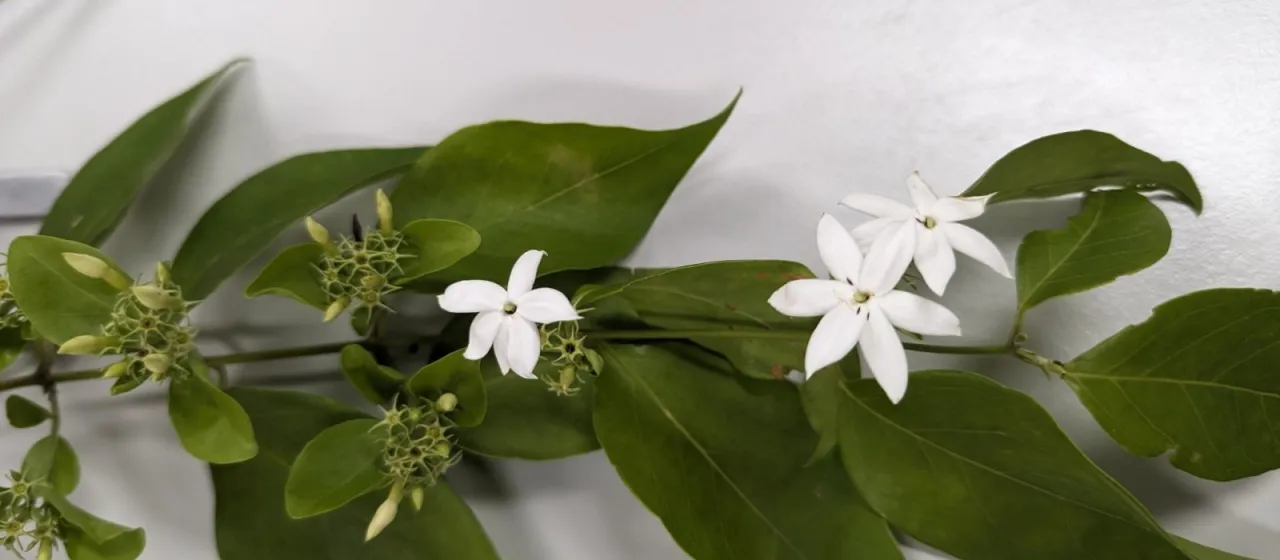
Description
Elongated jasmine (Jasminum elongatum) is a perennial climbing shrub belonging to the Oleaceae (Olive) family. This species is recognized for its vigorous growth and specific physiological adaptations that differentiate it from other common jasmine varieties, making it an interesting subject for both botanical research and professional cultivation.
The plant originates from the tropical regions of Southeast Asia. Its natural habitat includes humid forests and forest edges, where it utilizes its flexible stems to climb toward the canopy in search of sunlight. In agricultural environments, it thrives best in regions that mimic these warm and humid conditions.
Botanically, Jasminum elongatum is characterized by its opposite, elongated leaves and fragrant flowers that typical of the Jasminum genus. The plant exhibits a rapid vegetative cycle, allowing it to produce significant biomass within a single growing season when provided with adequate irrigation and nutrients.
The cultivation requirements focus on well-drained, nutrient-rich soil with an acidic to neutral pH level. As a tropical species, it is highly sensitive to frost and low-temperature stress. Agronomic practices require the installation of sturdy trellis systems for structural support, regular nitrogen-rich fertilization, and consistent moisture management to prevent root desiccation.
Economic applications for Jasminum elongatum are diverse and include:
- Landscape design and vertical gardening in tropical zones.
- Extracting essential oils for high-end perfumery and aromatherapy.
- Sourcing biological compounds for pharmaceutical research and traditional medicine.
Common plant health issues include root rot caused by poor soil drainage and pest infestations such as spider mites and scale insects. Implementing an integrated pest management strategy, which includes regular canopy inspections and maintaining optimal airflow around the plants, is essential for ensuring long-term plantation health.