
Description
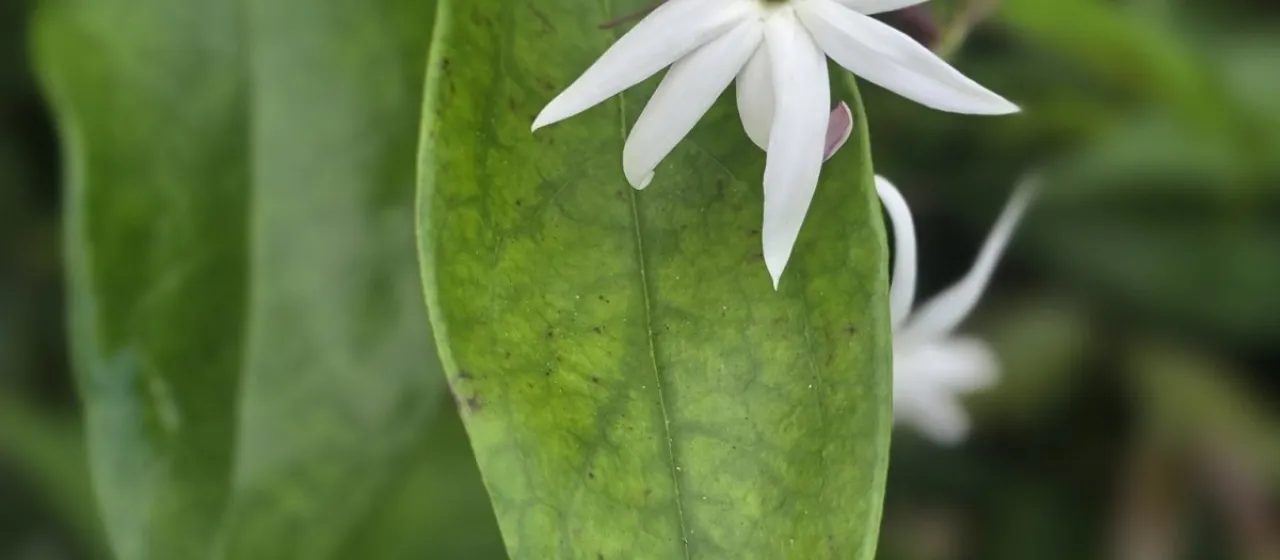
Laurel-leaf jasmine (Jasminum laurifolium) is an evergreen vining shrub belonging to the Oleaceae family. It is widely recognized for its lush, glossy foliage and highly fragrant white flowers, making it a sought-after species in ornamental horticulture and greenhouse cultivation.
The plant originates from the tropical regions of Southeast Asia. It thrives in warm, humid environments, where it naturally climbs through forest understories. Today, it is cultivated primarily in tropical and subtropical regions for landscape design, while in cooler climates, it is managed as a container plant in conservatories.
Botanically, this species is characterized by its slender, flexible stems and lanceolate, leathery leaves that resemble those of the laurel tree. The flowers are typically arranged in small terminal clusters and are known for producing a sweet, heady fragrance that is highly prized in the perfume industry in some parts of the world.
Successful cultivation of Jasminum laurifolium depends on well-draining, nutrient-rich soil and a consistent watering schedule. It requires bright, indirect light to maintain foliage density and promote healthy budding. It is not frost-tolerant, so it must be protected from cold winds and temperatures dropping below 10°C to ensure the plant's survival.
- Requires regular pruning to manage growth
- Benefits from organic fertilizer during the growing season
- Needs protection from intense direct midday sun
Maintenance involves diligent monitoring for pests, particularly mealybugs, aphids, and spider mites, which can be detrimental in closed environments like greenhouses. Common diseases include fungal leaf spots caused by excessive humidity or poor air circulation. Proper spacing and ventilation remain the most effective preventive measures for these issues.