
Description
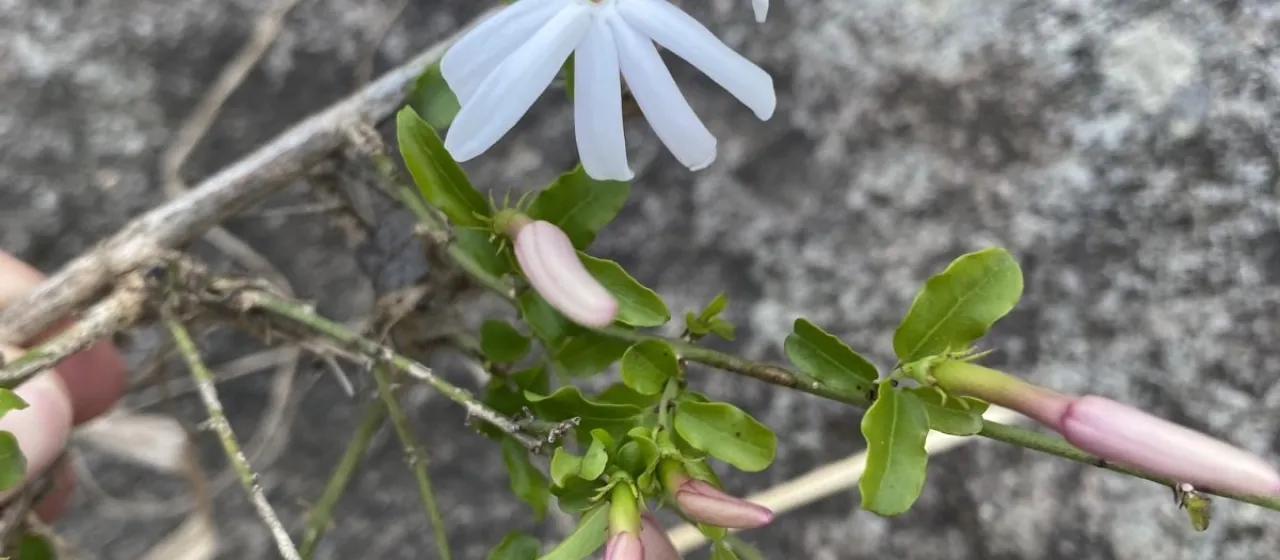
Jasminum multipartitum, commonly known as the starry wild jasmine, is an evergreen climbing shrub belonging to the Oleaceae family. It is highly valued in horticulture for its intense, sweet fragrance and stunning, star-shaped white flowers with characteristic red-pink buds. Unlike many other jasmine species, this variety maintains a lush, glossy foliage throughout the year, making it an excellent candidate for aesthetic landscaping.
The plant is native to the southern parts of Africa. It naturally thrives in diverse habitats, ranging from dense thickets to rocky, well-drained hillsides. Due to its natural adaptation to warm and temperate environments, it is widely cultivated across Mediterranean climates and remains a popular choice for conservatories and indoor gardening in colder regions.
Botanically, Jasminum multipartitum is a robust grower that can reach heights of 2–3 meters when provided with suitable climbing support. Its leaves are opposite, dark green, and oval-shaped, providing a vibrant backdrop to the seasonal floral displays. The species is characterized by its woody stems, which can become quite thick as the plant matures, allowing it to withstand minor environmental stressors.
Agricultural requirements for this jasmine include well-draining, nutrient-rich soil and a location that receives either full sun or light shade. Irrigation must be consistent, particularly during the active growing season, but it is critical to avoid waterlogging the root system.
- Maintain a slightly acidic to neutral soil pH.
- Apply balanced fertilizers during spring and early summer.
- Prune after flowering to encourage new growth and denser canopy.
In terms of usage, the plant is primarily utilized for ornamental purposes, specifically for trellises, fences, and container gardening. While generally resilient, the plant is susceptible to common pests such as spider mites, aphids, and scale insects. Maintaining optimal airflow and monitoring for early signs of fungal leaf spots or root rot ensures the longevity and health of the crop in any cultivation setting.