
Description
Jatropha messinica is a perennial shrub species belonging to the Euphorbiaceae family. This plant has gained recognition in agricultural circles due to the oil-rich content of its seeds, which positions it as a viable candidate for large-scale biodiesel production and as an industrial energy crop in arid regions.
The species is native to specific parts of Southern Africa, particularly the regions around Messina. Its evolutionary history in semi-arid ecosystems has endowed the plant with remarkable drought resistance, allowing it to survive in harsh environmental conditions where conventional agricultural crops would typically fail to thrive.
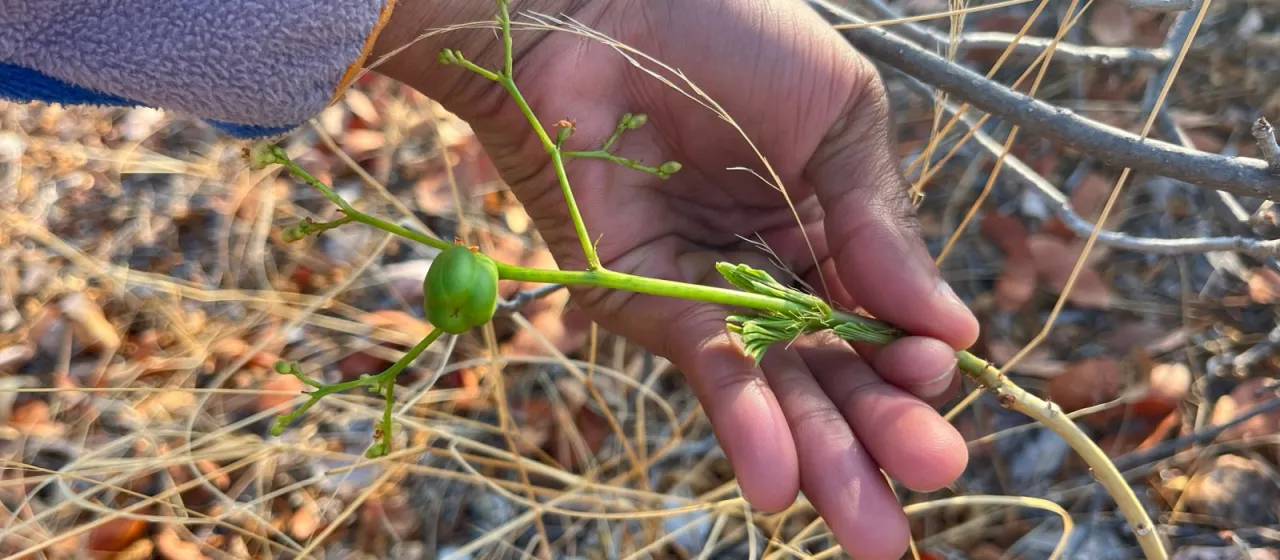
Botanically, Jatropha messinica exhibits a robust root system capable of anchoring the plant in unstable or sandy soils. Its leaves are usually alternate and palmate, providing efficient photosynthesis under intense light. The fruit is a capsule containing seeds that, once processed, yield oil with chemical properties suitable for high-quality biodiesel conversion.
Regarding cultivation requirements, the plant thrives in warm tropical and subtropical climates. It demands well-drained soil and cannot tolerate waterlogging, which often leads to root rot. While it is hardy and can survive on marginal lands, commercial cultivation yields are improved by consistent solar exposure and initial soil preparation that ensures deep root penetration.
In terms of agricultural management, standard practices include weeding during the establishment phase and monitoring for regional pests that affect the Euphorbiaceae family. While disease pressure can be managed through crop rotation and proper spacing, farmers must be aware that the plant is toxic if ingested and contains sap that can be irritating to human skin, requiring proper safety protocols during harvest.