
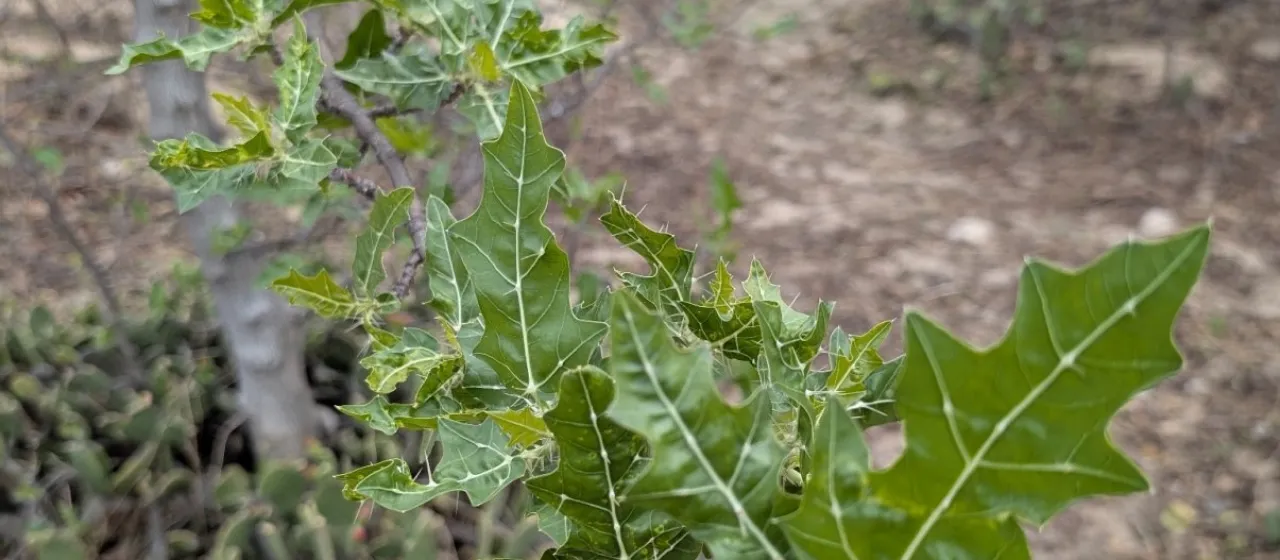
Description
Jatropha phyllacantha is a unique succulent shrub belonging to the Euphorbiaceae family. This species is gaining interest in agricultural circles for its remarkable resilience and its classification as a potential source for biofuel production, particularly in regions where conventional crops cannot thrive due to water scarcity.
The plant is native to the Caatinga region of Brazil, a semi-arid biome characterized by irregular rainfall and harsh conditions. Due to this origin, the cultivation range is primarily focused on tropical areas that experience long dry seasons, where the plant can capitalize on its innate ability to manage water efficiency.
Botanically, it is defined by its thorny, woody structure and succulent stems that serve as water reservoirs. The leaves are typically simple, often shedding during extreme droughts to minimize transpiration. The plant possesses a robust, deep-reaching root system that enables it to anchor firmly into rocky and nutrient-poor substrates, reflecting its evolutionary success in arid environments.
In terms of agrotechnics, Jatropha phyllacantha requires extremely well-drained soil. In clay-heavy soils, the risk of root rot increases significantly, making gravelly or sandy soil types preferable. Maintenance is relatively low; however, proper spacing is essential to ensure adequate airflow and sunlight penetration, which helps prevent the development of fungal pathogens.
Economically, the plant is studied for its lipid-rich seeds which are processed for industrial oils and biodiesel. While generally hardy, the crop can be susceptible to mealybugs and root fungus if irrigation protocols are improperly managed. Integrated pest management and controlled water application are key strategies for maximizing yield in a commercial setting.
- High drought resistance
- Thorny defense mechanism
- Low nutritional soil requirements
- Potential for biodiesel feedstock
- Adaptability to high-temperature climates