
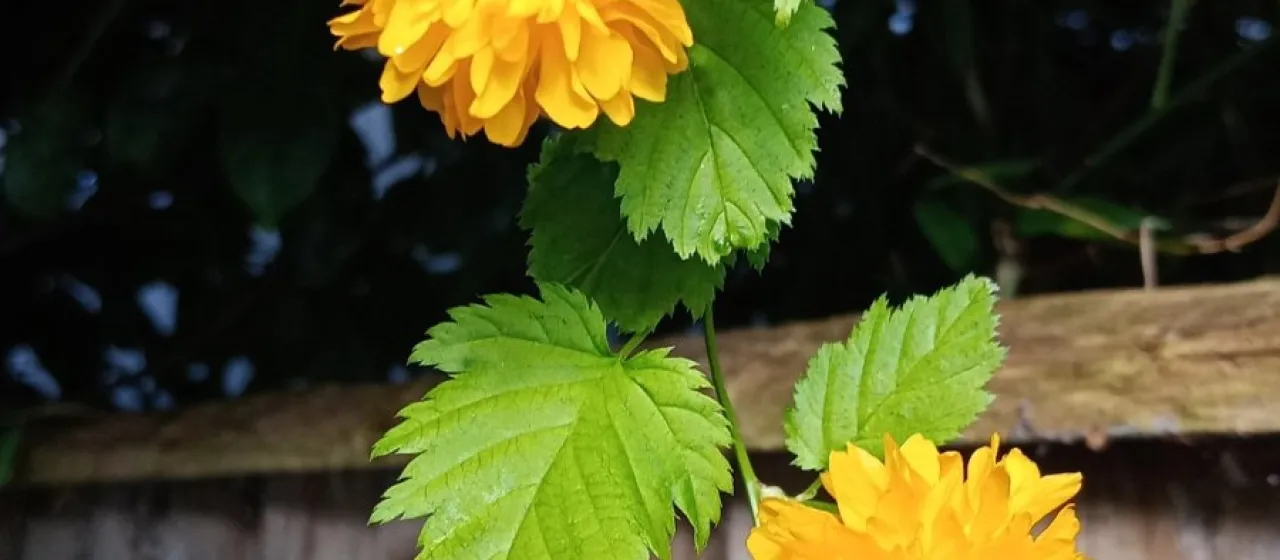
Description
Japanese kerria (Kerria japonica) is a deciduous ornamental shrub belonging to the Rosaceae family. It is a monotypic genus, widely appreciated in horticulture for its vibrant, bright yellow flowers that bloom on slender, green arching stems, creating a distinctive appearance in spring.
The plant originates from the mountainous regions of East Asia, specifically China and Japan. It has been introduced to various temperate regions worldwide, where it is cultivated in gardens and parks for its aesthetic appeal, particularly in settings that offer shelter from harsh, direct sunlight and strong winds.
Botanically, it is characterized by its bright green stems that remain attractive even in winter. The leaves are alternate, ovate-lanceolate with a serrated margin, and provide a lush green backdrop for the flowers. The plant typically reaches a height of 2 to 3 meters, forming an elegant, spreading habit.
The agronomic requirements for Japanese kerria include fertile, well-draining soil with a neutral to slightly acidic pH. The shrub thrives in partial shade, which helps maintain the intensity of its yellow blooms. Maintenance involves regular pruning of old branches after the flowering season to encourage new, vigorous growth.
Economically, the plant is valued for landscaping and ornamental gardening, serving as an excellent specimen for borders or as part of mixed shrub groupings. While generally robust, the plant can be susceptible to fungal leaf spots if soil drainage is poor, and aphids may occasionally appear during the growing season.
- Exposure: Partial shade to full sun.
- Soil moisture: Consistent, well-drained.
- Propagation: Softwood cuttings or division.
- Winter care: Protect from extreme cold in colder zones.