
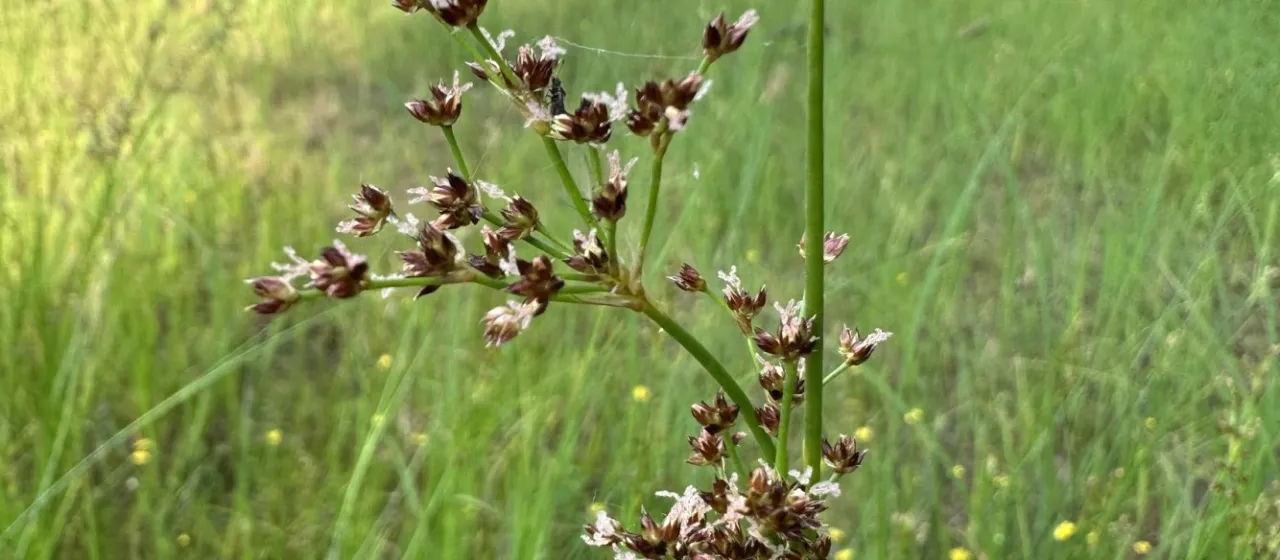
Description
Sharp-flowered rush (lat. Juncus acutiflorus) is a perennial herbaceous plant belonging to the Juncaceae family. In agricultural and botanical contexts, this species is recognized for its ability to thrive in wet, boggy environments where many conventional crops would fail to establish.
The native range of this species covers much of Europe, North Africa, and parts of Western Asia. It is typically found in habitats characterized by high soil moisture, including wet meadows, fens, and the margins of ponds and lakes. Its adaptability makes it an important species in wetland ecosystem management.
Botanically, the plant features erect stems that can reach up to 100 cm in height. Its leaves are distinctively septate, meaning they contain internal horizontal cross-walls, which is a key identification feature. The rhizome system is robust and creeping, allowing the plant to form dense clusters or mats that are highly effective at stabilizing muddy substrates.
Regarding cultivation, the species prefers damp to waterlogged conditions and shows high tolerance for acidic soils. Agronomic practices for this plant usually involve maintaining high water tables and limiting competing vegetation during the early stages of growth. It is relatively resistant to common pests, though fungal pathogens may occur if drainage is suddenly improved and the plant is stressed.
The primary economic and environmental applications include erosion control on embankments and water filtration in constructed wetlands. While its nutritional value is lower compared to standard forage grasses, it remains a vital component of rough grazing pastures in high-moisture agricultural zones, providing reliable ground cover where agricultural intensification is restricted.
- High tolerance for waterlogging.
- Excellent soil stabilization properties.
- Adaptable to nutrient-poor soils.
- Natural biological water filter.