
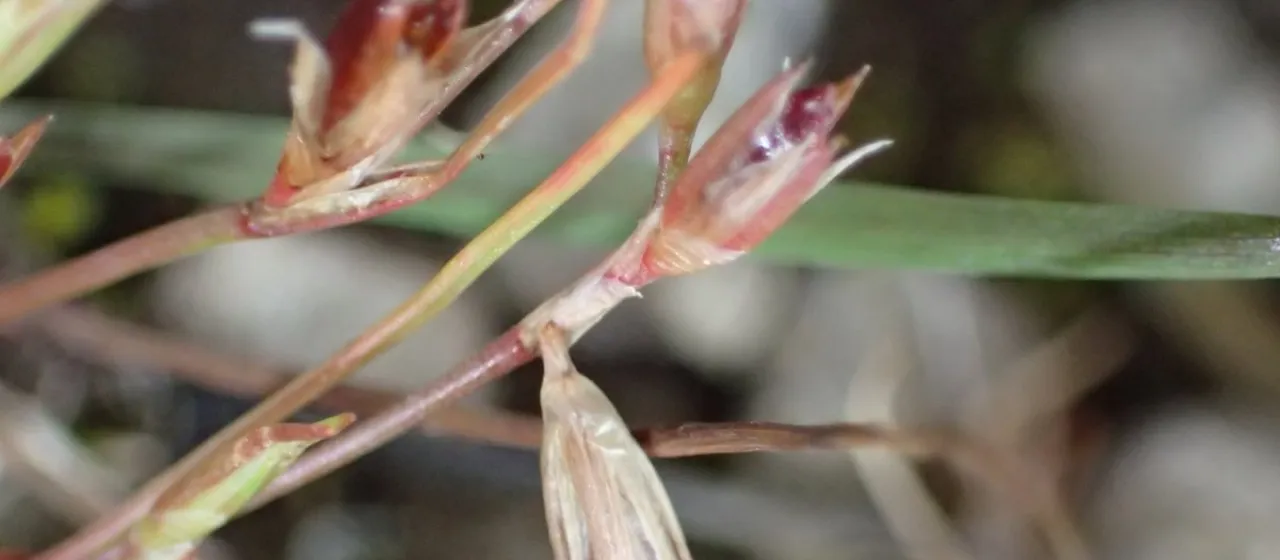
Description
Toad rush (Juncus bufonius) is an annual herbaceous plant belonging to the Juncaceae family. In agronomy, it is identified as a persistent weed that thrives in wet and compacted soils, frequently colonizing agricultural fields where moisture management is inadequate.
The species has a cosmopolitan distribution, occurring naturally across diverse climates globally. In field conditions, it is predominantly found in areas characterized by poor drainage, irrigation ditches, and low-lying parts of arable land, where it exploits conditions that other crops may find stressful or unsuitable for optimal growth.
Botanically, toad rush is a low-growing plant, typically reaching 5–20 cm in height with branched, slender stems and thin, needle-like leaves. Its reproductive strategy relies on the production of a vast quantity of seeds, which are highly mobile and easily dispersed through machinery, surface water flow, and during cultivation practices.
Effective management of toad rush in cropping systems requires an integrated approach focusing on site-specific soil conditions:
- Improving soil drainage through tile installation or surface grading to reduce waterlogging.
- Implementing regular cultivation schedules to disrupt the life cycle of the plant.
- Ensuring proper seedbed preparation to discourage weed germination.
- Using crop rotation to interrupt the specific micro-environmental needs of the rush.
The agricultural impact of toad rush is primarily competitive. It reduces overall crop yields by competing for nutrients and space, particularly in the early stages of crop development. Due to its hardiness and ability to thrive in disturbed, moist environments, it remains a common challenge for farmers managing heavy or poorly drained agricultural soils.