
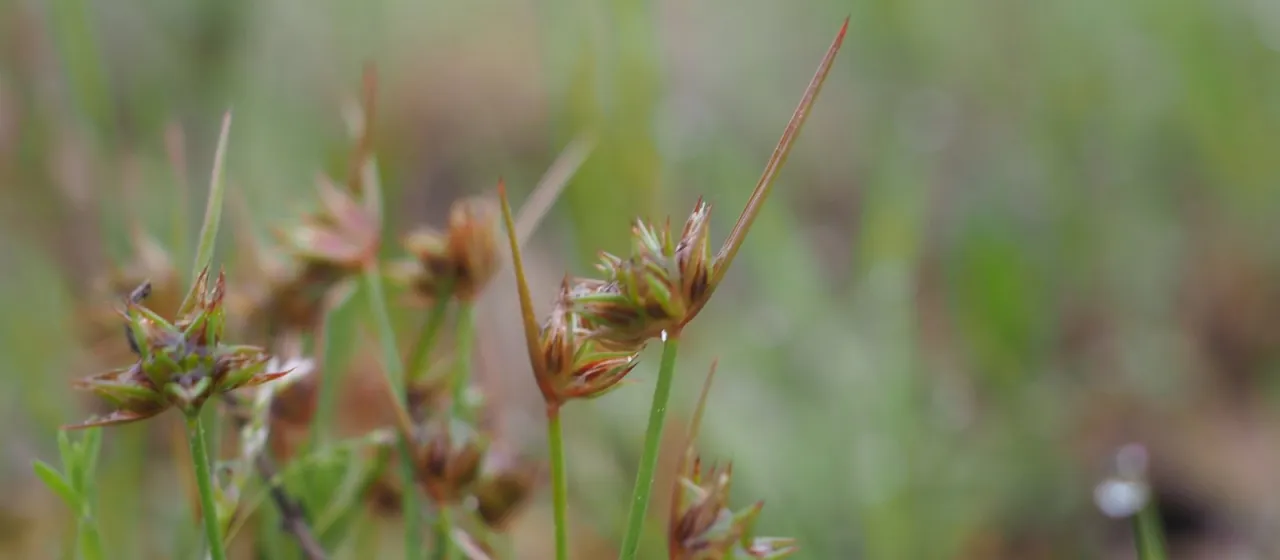
Description
Capitate rush (Juncus capitatus) is an annual herbaceous plant belonging to the Juncaceae family. Unlike many perennial rushes, this species completes its entire life cycle in a single growing season, making it a unique subject for researchers focusing on wetland vegetation dynamics and botanical succession.
The native range of the species extends across Europe, the Mediterranean region, and parts of Africa. It typically inhabits open, wet environments such as damp sandy areas, the margins of ponds, and ephemeral wetlands. The plant is highly sensitive to its immediate environment, requiring specific moisture levels to thrive and successfully produce seeds.
Botanically, this rush is characterized by its small stature, typically reaching between 2 to 10 centimeters in height. Its stems are thin and erect, while the leaves are primarily basal and thread-like. The most diagnostic feature is the dense, capitate (head-like) inflorescence located at the stem apex, which distinguishes it from other species within the Juncus genus.
The agricultural and environmental requirements for Juncus capitatus are specialized. It favors acidic, nutrient-poor, and moist sandy soils. The plant is intolerant to high-density vegetation competition and requires significant sunlight exposure to develop. Proper soil moisture management is critical, as it cannot withstand prolonged deep flooding or complete desiccation of the upper soil layers during its active growth phase.
While not a primary agricultural crop, the species is significant for biodiversity and soil stabilization in specific wetland zones. Typical challenges include vulnerability to various fungal pathogens associated with moist environments and the risk of being outcompeted by more aggressive invasive weeds. Management of this species is largely focused on conservation and monitoring its presence as an indicator of habitat health.
- Preferential growth in acidic sandy substrates.
- Annual cycle requiring stable water levels.
- High sunlight requirements for development.