
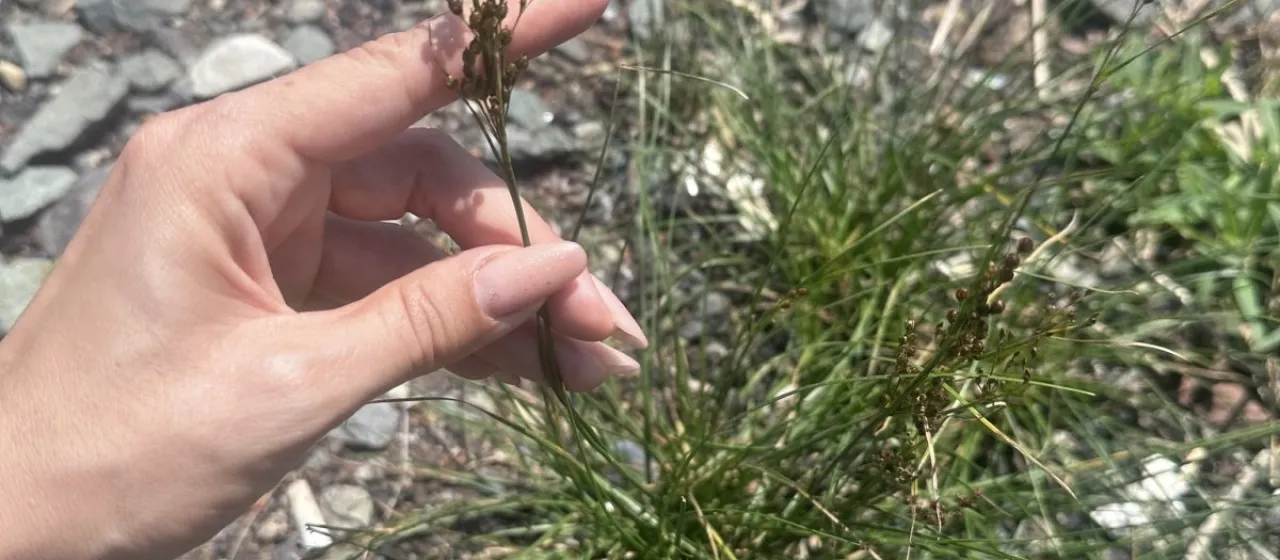
Description
Juncus gracillimus is a perennial herbaceous plant belonging to the Juncaceae family. In agronomic terms, it is recognized as a moisture-loving species that thrives in wet environments, providing a sustainable solution for cultivating land that is otherwise unsuitable for conventional cereal or forage crops.
The plant originates from temperate climate zones, where it naturally populates marshlands, riverbanks, and floodplains. Its ability to tolerate saturated soils makes it a vital component of wetland ecosystems, allowing it to dominate areas where soil oxygen levels are low and drainage is poor.
Botanically, Juncus gracillimus is characterized by its slender, wire-like stems that form dense, compact tufts. Its root system is exceptionally resilient and well-adapted to anaerobic soil conditions, providing strong anchorage and helping to stabilize the substrate against water erosion.
Successful cultivation of Juncus gracillimus requires precise water management. The plant prefers acidic to neutral soils with high moisture content. Agronomic practices focus on maintaining consistent soil hydration, as extended dry spells can severely limit biomass production and plant vigor.
The economic and practical applications of this species are diverse:
- Utilized as forage in wetlands where traditional grasses cannot survive.
- Employed in land reclamation projects to stabilize wet, eroded soils.
- Used in ornamental horticulture for pond and water garden landscaping.
- Applied in phytoremediation processes to naturally filter agricultural runoff.
Regarding health management, Juncus gracillimus is generally hardy, though it can be susceptible to specific fungal infections if water becomes stagnant for too long during warm periods. Pest management is typically integrated into the overall site maintenance strategy to ensure maximum crop health.