
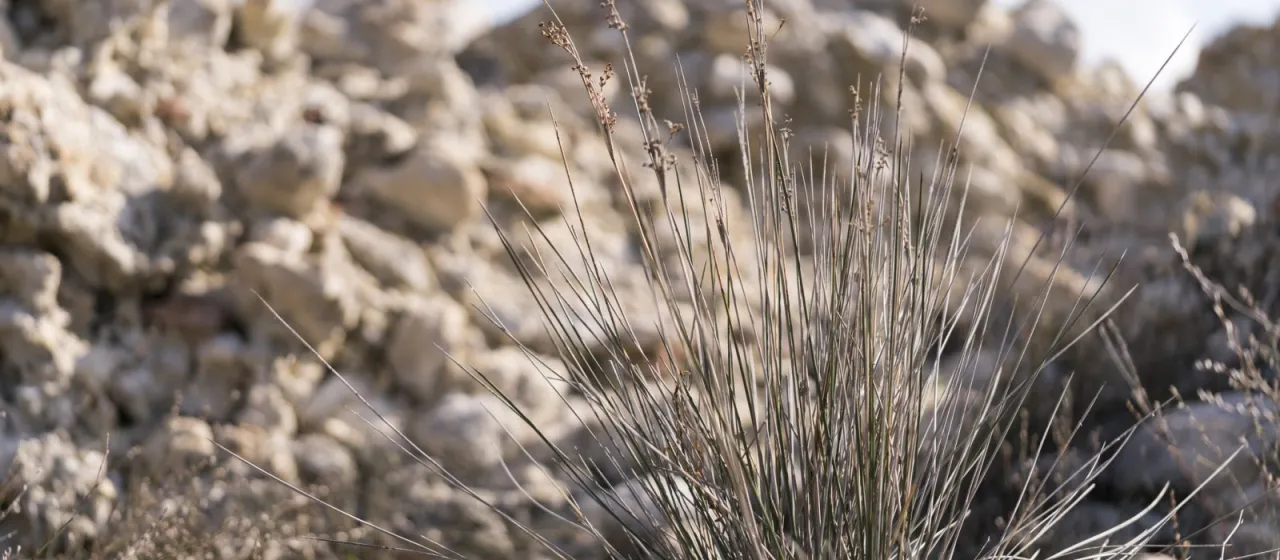
Description
Heldreich's rush (Juncus heldreichianus) is a perennial herbaceous plant belonging to the Juncaceae family. It is a highly specialized species that thrives in challenging coastal and saline environments, making it a valuable asset for ecological restoration and wetland management projects.
The plant originates from the Mediterranean basin and is widely distributed along the coastal regions of Southern Europe and the Black Sea. It is naturally adapted to habitats such as salt marshes, coastal lagoons, and wet saline meadows, where it occupies the ecological niche of a dominant vegetation species.
Botanically, this species is characterized by rigid, cylindrical stems that form dense, clump-like stands. Its root system is exceptionally robust, allowing it to withstand environmental stressors such as fluctuating water levels and substrate instability. These morphological traits contribute to its resilience against wind and water erosion.
Agrotechnically, Juncus heldreichianus requires specific conditions involving high soil moisture and salinity tolerance. It is a true halophyte, meaning it can process and thrive in saline conditions that would be toxic to most agricultural crops. It requires very little maintenance, as it is naturally resistant to most common plant diseases and pests due to its tough tissue structure.
- Significant salinity tolerance.
- Excellent soil binding properties for erosion control.
- Low requirement for fertilizers or pesticides.
- High biomass production in wetland conditions.
In terms of agricultural and environmental use, Heldreich's rush is primarily employed in phytoremediation, specifically for purifying agricultural runoff and industrial wastewater. It is also used in sustainable landscaping for water treatment marshes and as a stabilizing cover for degraded coastal land. While not a primary food crop, its role in maintaining ecological balance is significant.