
Description
Round-headed rush (Latin: Juncus holoschoenus) is a perennial herbaceous plant belonging to the Juncaceae family. This species is native to regions with moderate climates and is well-adapted to habitats characterized by high soil moisture, such as wet meadows, lake shores, and riverbanks.
The distribution range of the plant is quite broad, stretching across parts of Europe, North Africa, and Western Asia. In agriculture and environmental management, it is highly valued for its ability to thrive in damp or even waterlogged soils, providing ecological functions that support the stability of wetland ecosystems.
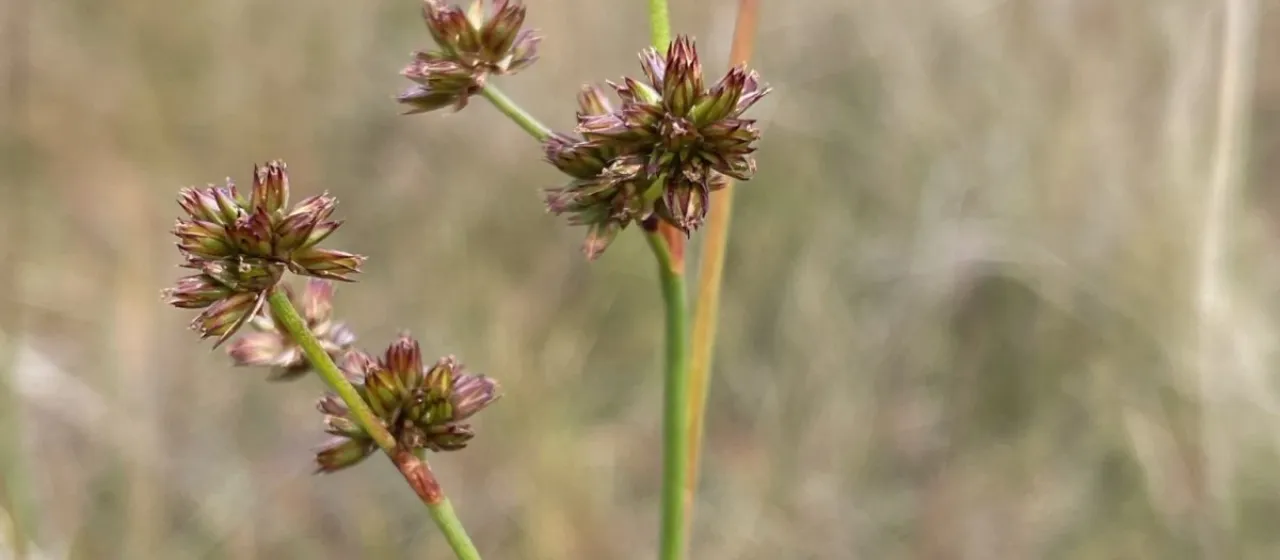
Botanically, Juncus holoschoenus is recognized by its robust, cylindrical stems and a deep-reaching, fibrous root system. Its defining feature is the dense, cluster-like arrangement of inflorescences, which gives the plant its common and scientific identifiers. The leaves are typically thin and rigid, adapted to withstand environmental stressors common in aquatic habitats.
Agricultural cultivation requires specific attention to soil moisture levels. The plant is not overly demanding regarding nutrient content but thrives in silty or loamy soils with high organic matter. Proper management involves ensuring the site is not prone to complete drying out during the growing season, while also providing sufficient sunlight to encourage healthy vegetative growth.
Its primary uses include erosion control on the banks of canals, bio-engineering projects for water quality improvement, and ornamental planting for landscaping in water-rich areas. Historically, the sturdy stems have been used in traditional weaving for creating baskets, mats, and various household items, reflecting its potential for sustainable, eco-friendly craft applications.
- Requires consistently damp soil for optimal growth.
- Can be propagated through division of the root system.
- Highly resistant to seasonal flooding conditions.
- Needs minimal fertilization due to its natural adaptability.
The plant is relatively hardy, but like many wetland species, it can be susceptible to leaf spot diseases and rust fungi if planting density is too high and airflow is poor. Pest issues are rare, but monitoring for stem-boring insects is recommended during the early stages of establishment to ensure a healthy and uniform crop stand.