
Description
Toad rush (Latin: Juncus bufonius) is an annual herbaceous plant belonging to the Juncaceae family. In agricultural settings, it is primarily categorized as an opportunistic weed that thrives in wet, compacted soils and disturbed areas, often appearing in cultivated fields after heavy rainfall or inadequate drainage.
The species has a cosmopolitan distribution, occurring naturally across almost all continents. It is highly adaptive to various climates, favoring moist environments such as ditch banks, muddy fields, and edges of ponds. Its ability to tolerate diverse conditions makes it a widespread pioneer species in fallow or poorly managed agricultural land.
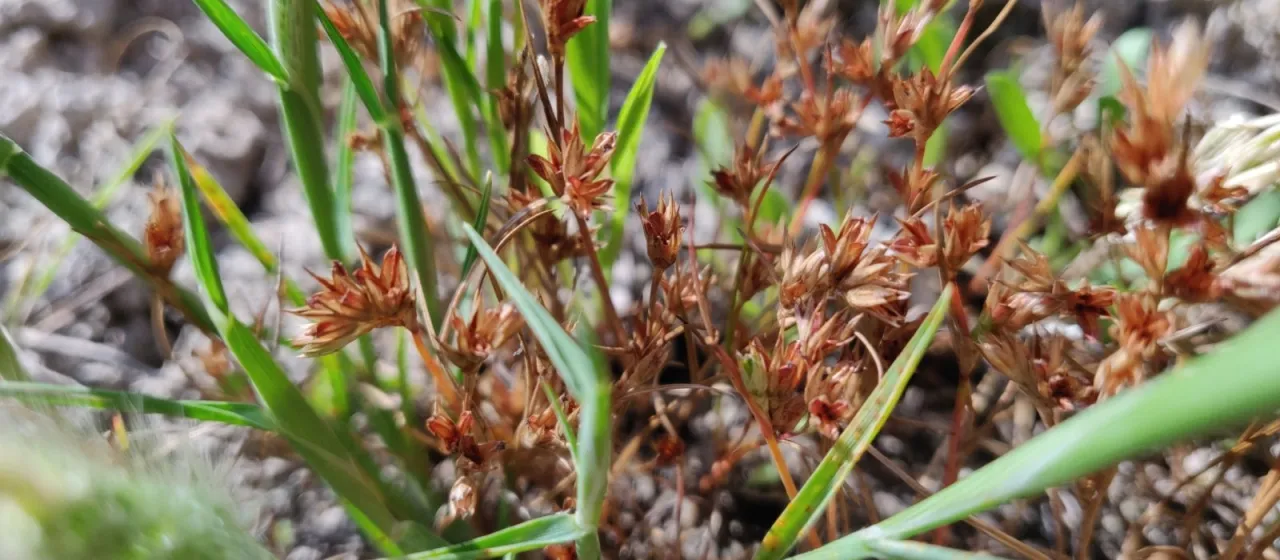
Botanically, Toad rush is characterized by its slender, branching stems that grow up to 25 cm in height. The leaves are grass-like and narrow, while the inflorescence consists of small, greenish-brown flowers. The plant produces a significant number of tiny seeds, which allow it to establish dense stands quickly during the growing season.
Agronomic management is focused on habitat modification. Because the plant requires consistently moist conditions to germinate and flourish, the most effective control method is improved soil drainage. Standard agricultural practices such as crop rotation, competitive planting, and deep tillage help reduce the seed bank in the topsoil.
The economic impact is primarily linked to the competition it poses to crops in poorly drained lowland areas. While it is not considered a primary crop, it serves as a bio-indicator for soil saturation levels. No major pests or diseases are known to exclusively target Toad rush, contributing to its resilience in non-cultivated habitats.