
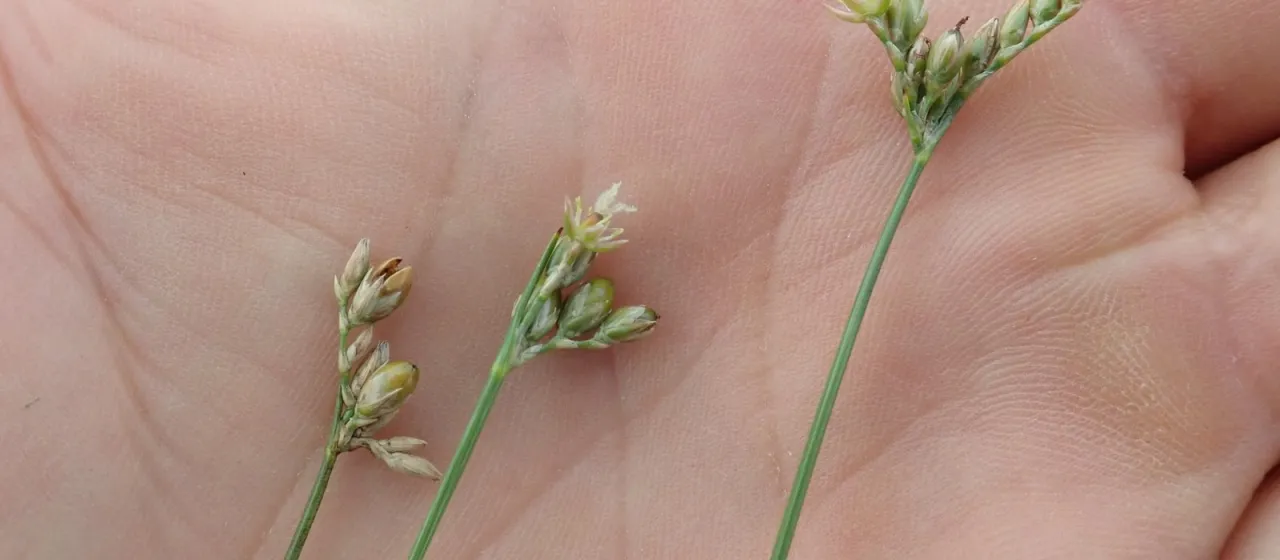
Description
Juncus imbricatus is a perennial herbaceous plant belonging to the Juncaceae family. In agronomic contexts and specialized landscaping, this species is highly valued for its ability to thrive in wet, saturated environments and its structural contribution to stabilizing soil in damp areas.
Originating primarily from South America, the species has demonstrated significant environmental adaptability. Its cultivation range has expanded into various temperate regions, where it is increasingly used for land reclamation and as a functional component in managed water ecosystems and gardens.
Botanically, the plant is characterized by dense tufts of rigid, erect stems. The leaves exhibit a distinctive imbricate (overlapping) arrangement at the base, which gives the plant its scientific name. The root system is fibrous and aggressive, playing a crucial role in soil erosion control and nutrient absorption from aqueous environments.
The agrotechnical requirements for Juncus imbricatus focus on maintaining high soil moisture levels. It performs best in full sun or light shade and thrives in various soil types, provided that water is readily available. Management practices include ensuring adequate hydration and conducting seasonal pruning of dead foliage to maintain the plant's vigor.
The main practical applications include the stabilization of riverbanks, the creation of buffer strips near agricultural water bodies, and decorative use in water-feature landscaping. While generally resistant, the plant can be susceptible to root rot if drainage is completely absent in cold stagnant conditions, and occasional monitoring for common wetland pests is recommended to maintain optimal plant health.