
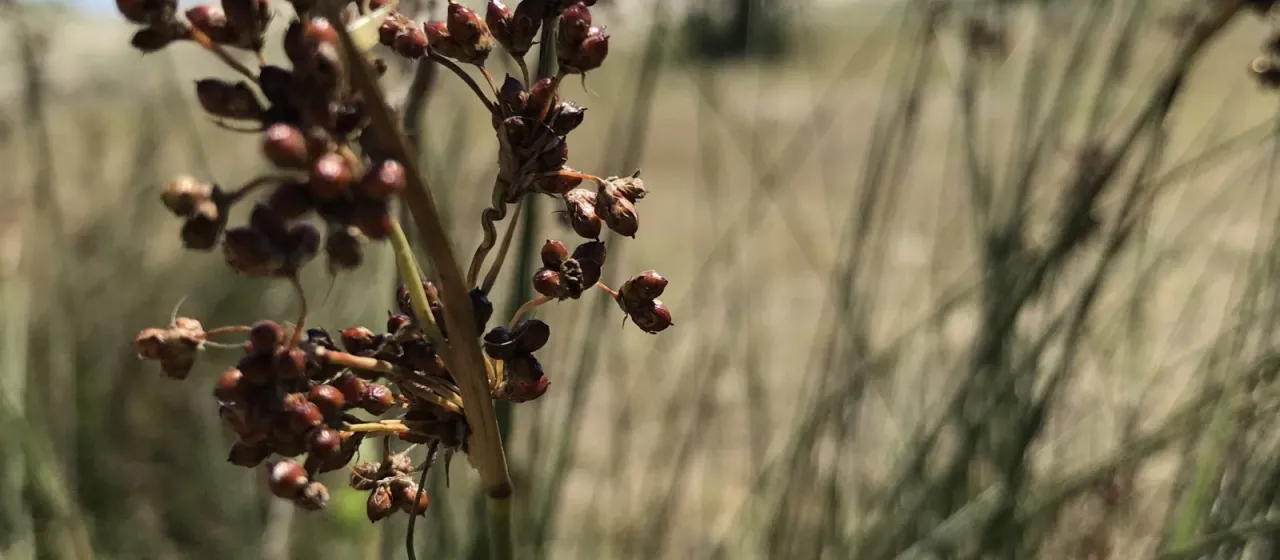
Description
Shore rush (Juncus littoralis) is a perennial herbaceous plant belonging to the Juncaceae family. In an agricultural and land management context, this species is valued for its hardiness and ability to thrive in waterlogged environments where conventional crops fail to establish.
Originating from the coastal regions and wetlands of the Northern Hemisphere, the plant is widely distributed in temperate zones. Its cultivation is strategically focused on reclaimed wetlands, drainage basins, and areas prone to periodic flooding, serving as a biological tool for land management.
Botanically, the plant features erect, cylindrical stems that lack traditional leaves, a common adaptation of the genus Juncus. The underground structure consists of a robust creeping rhizome system that creates a dense mat, essential for preventing soil erosion and maintaining the structural integrity of water banks.
Regarding cultivation requirements, shore rush prefers full sun and consistently moist, nutrient-rich soils. It can tolerate standing water, making it ideal for riparian buffers. Agronomic management involves site preparation and initial irrigation, though once established, the plant requires minimal input beyond management of its spreading behavior.
The primary agricultural applications include phytoremediation of contaminated water bodies, stabilization of pond embankments, and use as an ornamental grass in landscape design. Additionally, in traditional craft, the harvested stalks serve as a flexible material for weaving and binding applications.
- Rust fungi (Puccinia spp.)
- Stem-boring insects
- Slugs and snails
- Leaf spot pathogens
Common issues for this crop include fungal infections, such as rust, which can appear during periods of high humidity and poor ventilation. Pests typically include minor insect infestations that target the stem tissue, though these rarely cause significant economic damage to the plant population as a whole.