
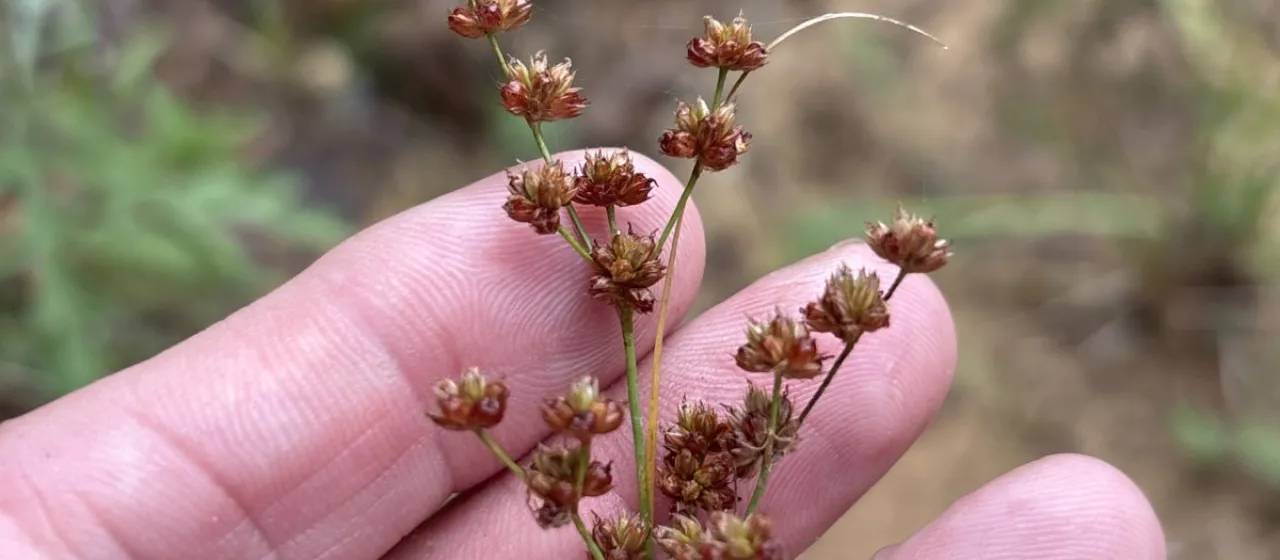
Description
Grass-leaf rush (Latin: Juncus marginatus) is a perennial herbaceous plant belonging to the Juncaceae family. It is a highly specialized species that thrives in wet, marshy habitats, typically found in soils that maintain high moisture content throughout the growing season.
Native to North America, the species has successfully adapted to a variety of wetland ecosystems, including prairies, meadows, and pond edges. Its ability to tolerate fluctuations in water levels makes it a resilient plant for areas with seasonal flooding, as well as for stable riparian zones.
Botanically, the plant is distinguished by its narrow, grass-like leaves and small, condensed head-like inflorescences. The root system is fibrous and dense, providing excellent structural support for the plant and enabling it to stabilize soft, wet soil substrates against erosion.
Cultivation requirements focus primarily on water management and sunlight. While the plant prefers moist to saturated soils, it requires full sun for optimal development. Soil acidity should be slightly acidic to neutral. Little fertilizer is needed in natural wetland sites, as the plant is well-adapted to surviving in nutrient-variable conditions.
- Landscaping for artificial ponds and water gardens.
- Integration into biofiltration systems to treat runoff.
- Erosion control for stream banks and shoreline stabilization.
- Use in ecological restoration projects for wetland habitats.
The Grass-leaf rush is generally considered robust and resistant to most common plant diseases. However, in poorly managed or extremely dense stands, fungal issues like leaf spot may occur if air circulation is insufficient. Pests are rarely a significant problem, as the plant's tough foliage is not highly attractive to most common herbivores.