
Description
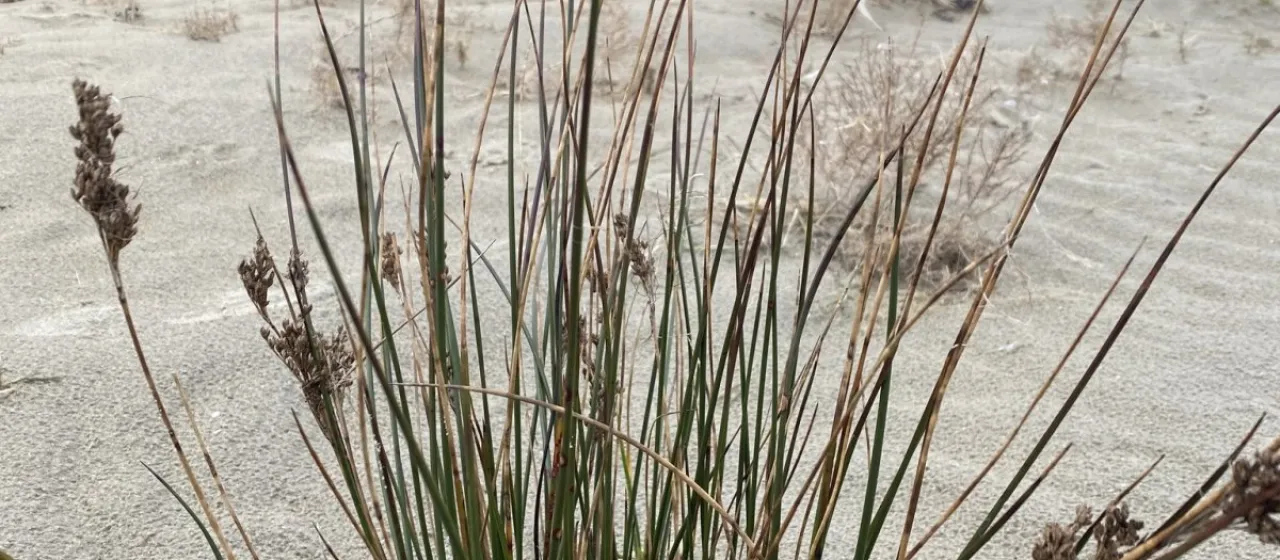
Sea rush (Latin: Juncus maritimus) is a perennial grass-like plant belonging to the Juncaceae family. It is a robust, rhizomatous plant known for its remarkable salt tolerance and ability to thrive in harsh coastal environments where most agricultural crops would perish.
The plant has a wide natural distribution across the coastlines of Europe, the Mediterranean, Africa, and parts of Asia. It is typically found in salt marshes, brackish wetlands, and sandy dunes, where it plays a fundamental role in stabilizing sediment and preventing soil erosion.
Botanically, the Sea rush is characterized by stiff, cylindrical, dark-green stems that can reach heights of up to one meter. Its root system is extensive and creeping, which allows it to form dense clusters that physically protect the coastline from the erosive forces of wind and water.
Cultivation requirements for Juncus maritimus focus on maintaining appropriate moisture levels and salinity. It is a true halophyte, meaning it requires high salt concentrations in the soil to perform at its best. It thrives in saturated, saline substrates and is generally resilient to both waterlogging and periods of lower water availability.
Economic and practical uses of Sea rush include:
- coastal defense and restoration of salt marsh ecosystems;
- bio-remediation of saline soils and treatment of brackish wastewater;
- traditional production of mats, baskets, and high-quality artisanal wickerwork;
- provision of habitat and cover for coastal fauna in protected zones.
The Sea rush is naturally resistant to most common agricultural pests and fungal diseases due to its harsh habitat and high salinity tolerance. There are no major economic concerns regarding specific insect infestations, although over-harvesting or significant changes in water salinity levels can negatively affect population health in managed areas.