
Description
The sharp-fruited rush (Juncus oxycarpus) is a perennial herbaceous plant belonging to the Juncaceae family. While not a conventional crop, it is an essential plant for managing marginal agricultural lands characterized by high water tables and poor drainage, where typical field crops fail to thrive.
Native to Eurasia, the species is widely distributed across wetlands, riverbanks, and marshy meadows. Its geographic range allows it to adapt to diverse climatic conditions, provided that the soil moisture levels remain consistently high throughout the growing season, making it a reliable species for ecological landscaping.
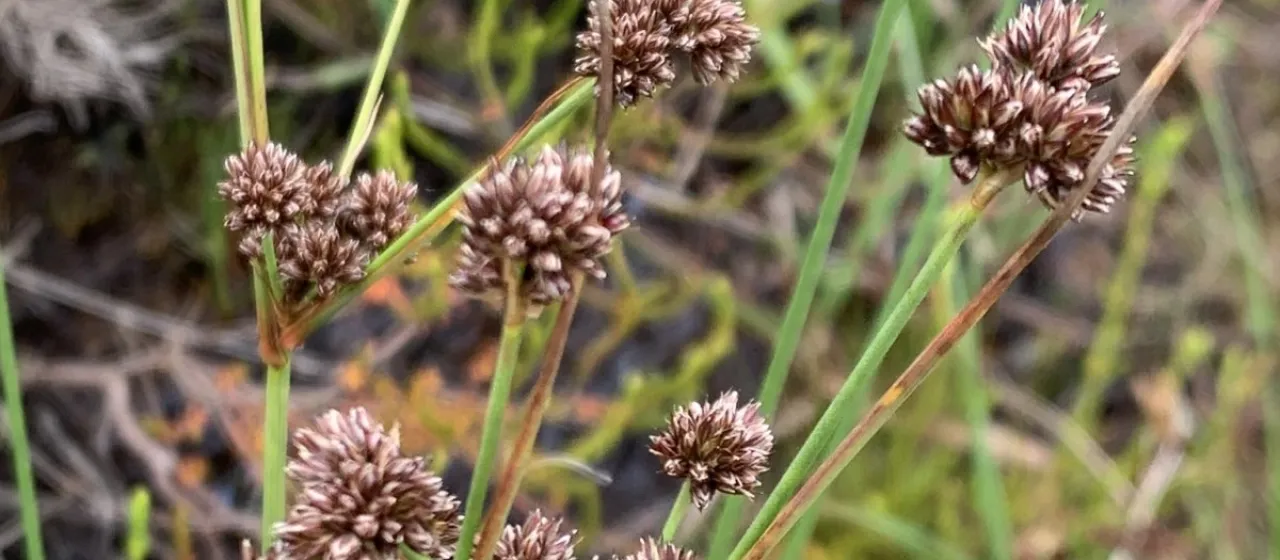
Botanically, Juncus oxycarpus is distinguished by its cylindrical, hollow leaves with internal septa and erect, stiff stems that can reach nearly a meter in height. The inflorescence consists of dense clusters of small flowers that develop into sharp-tipped seed capsules, which are the primary morphological characteristic used for identification.
Agronomically, this plant requires specific soil conditions, thriving in damp, poorly drained soils where it acts as a stabilizing agent. It is highly tolerant of acidic soil pH and periodic inundation. Propagation is primarily through its vigorous rhizome system, which allows it to form stable, dense mats that effectively lock soil particles in place.
Agricultural and environmental applications include:
- Stabilization of drainage channels and irrigation ditches.
- Phytoremediation of water runoff to improve local water quality.
- Prevention of erosion on vulnerable farmland perimeters.
Disease management for Juncus oxycarpus usually involves monitoring for fungal rots that may occur if the water becomes stagnant and polluted. The plant is rarely troubled by traditional pests, though it may host specific insects associated with wetland habitats; generally, the cultural resilience of the species necessitates minimal chemical intervention.