
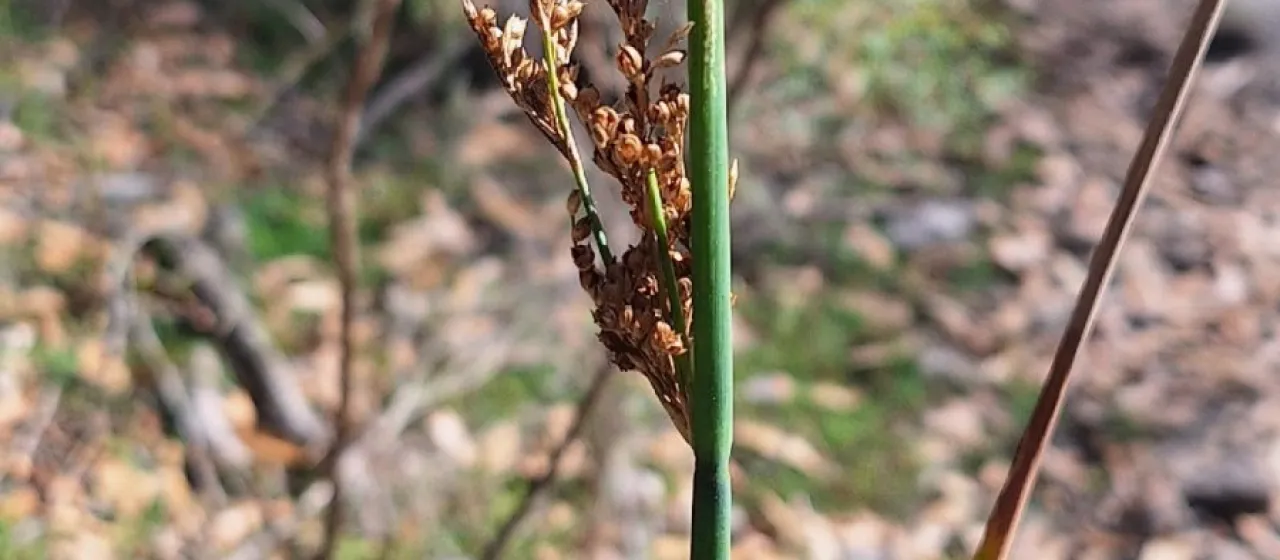
Description
Pale rush (Juncus pallidus) is a perennial herbaceous plant belonging to the Juncaceae family. It is characterized by dense, tufted growth and stiff, cylindrical stems that often exhibit a pale or greyish-green hue, making it a distinct feature in wetland habitats.
Native to Australia and New Zealand, this plant has adapted to thrive in a variety of moist conditions. Its natural distribution is largely concentrated in freshwater wetlands, marshy meadows, and along the margins of creeks and ponds, where it effectively competes with other hydrophytic vegetation.
Botanically, Juncus pallidus features a robust rhizomatous root system and stems that can reach significant heights. The stems are pithy and erect, providing a structural aesthetic that remains attractive throughout the year. The plant produces small, inconspicuous flowers in terminal clusters, which are typical for the Juncus genus.
In terms of cultivation, it requires moist to wet soil and full sun to partial shade. While it is hardy and capable of tolerating poor soil quality, moisture management is critical for its establishment and maintenance. It is generally resistant to most common agricultural pests, although stagnant water must be balanced to prevent potential fungal issues in enclosed environments.
The practical application of the pale rush is diverse. Beyond its ornamental use in water garden landscaping, it is utilized for soil stabilization and environmental remediation. Its ability to absorb nutrients makes it an effective tool in natural filtration systems designed to treat agricultural runoff or wastewater before it enters larger bodies of water.
- High tolerance to saturated soil conditions.
- Low maintenance requirements once established.
- Excellent for bank erosion control.
- Strong structural presence in all seasons.