
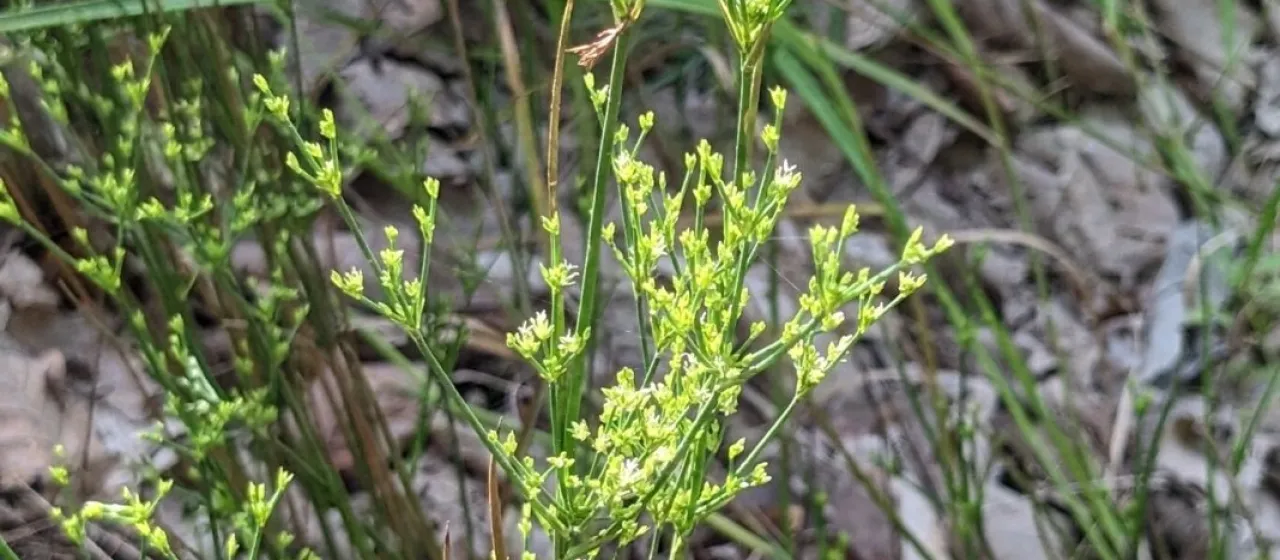
Description
Japanese rush (Juncus papillosus) is a perennial herbaceous plant belonging to the Juncaceae family. It is recognized for its specialized adaptation to wet environments, making it a distinct member of the botanical group often categorized as hydrophytes or wetland grasses.
The native distribution area of this species is primarily located in East Asia, including Japan and adjacent coastal territories. In these regions, the plant thrives in natural wetland ecosystems, adapting to seasonal changes in water levels and fluctuating temperatures typical of these climatic zones.
Botanically, Juncus papillosus is characterized by its tufted growth habit and stiff, cylindrical stems. The leaves are typically basal, narrow, and often grooved, providing a unique texture to the plant's overall appearance. The inflorescence is a terminal cluster of small, brownish flowers that are highly characteristic of the Juncus genus.
Cultivation requirements are strict regarding moisture; the plant necessitates consistently moist or waterlogged soil to maintain vigor. Unlike conventional agricultural crops, it does not require deep drainage; rather, it performs best in soils with high organic matter content that retain water throughout the growing season.
Economically and ecologically, Japanese rush is utilized in landscape architecture, particularly for pond edging and water feature design. Furthermore, it is increasingly valued in bio-remediation projects where its root system aids in filtering nutrients and stabilizing substrate in wet habitats, minimizing the need for chemical soil treatment.
- Constant moisture preference
- Ideal for water feature edging
- Minimal pest susceptibility
- Perennial growth habit